WHR Solar Solutions is a Inverters and UPS, Solar energy company establishment in Lephalale, Limpopo, South Africa
WHR Solar Solutions — Inverters and UPS, Solar Energy Company in Lephalale, Limpopo
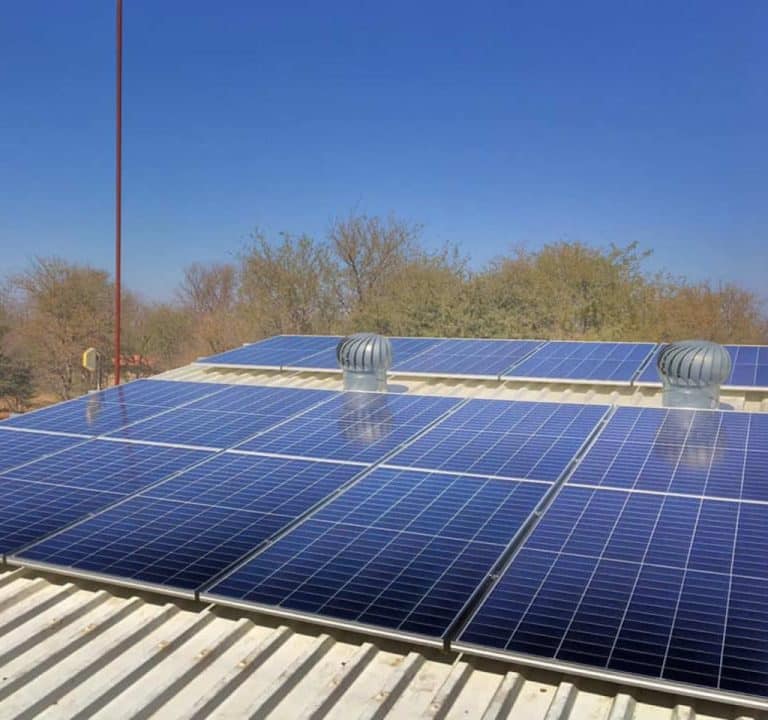
WHR Solar Solutions operates from Lephalale in Limpopo (with additional operations in Pretoria, Gauteng) as a design and installation specialist focused on solar power systems and energy management. Emphasising locally designed, locally manufactured products, the company highlights its partnership with Microcare, a line of solar components designed and produced in South Africa and backed by a five-year warranty. The emphasis across their offering is on practical, aesthetically conscious solar solutions that blend form and function while targeting reliable, value-for-money energy.
In the core category of Solar & UPS Inverters, WHR Solar Solutions presents a flexible portfolio designed to power a range of needs—from backup power to off-grid and grid‑assist configurations. The inverters featured are Pure Sine Wave, designed to handle variable charge rates and built to withstand voltage spikes. A notable feature set includes bidirectional operation with a built-in battery charger, compatibility with both Lithium Ion and Lead Acid batteries, and integrated communications for online monitoring. The system is described as robust and capable of proper integration with fuel generators, underscoring the company’s aim to deliver continuous power in diverse environments.
Their inverter offerings are available in multiple sizes to match different load profiles. Single-phase options range from 1 kW to 15 kW, while three-phase units cover 3 kW to 45 kW. A mobile, plug-and-play UPS option is also listed, with 1 kW and 2 kW versions. This breadth allows WHR Solar Solutions to accommodate small homes, commercial spaces, farms or remote facilities that require scalable power resilience in a compact footprint. Each unit is described as compatible with both common battery chemistries and with generators, enabling seamless hybrid energy strategies.
Beyond standalone inverters, the company promotes Mini Grid Solutions designed to meet single- or three-phase power requirements from 30 kW to 1 MW. The modular approach is presented as scalable and adaptable to various locations, with a balanced bus bar system and independent changeovers. The Mini Grid concept emphasises energy security and potential reductions in energy expenditure, with Lithium Ion compatibility and straightforward generator integration. The approach is suitable for businesses, farms, properties or homes seeking robust, expandable energy autonomy.
Additional offerings expand the scope of solar-enabled water and energy management. PV geyser controllers use standard solar panels to power common geyser elements, designed for retrofit on 2, 3 or 4 kW elements. The devices operate without plumbing changes, perform efficiently in variable weather, and include a mains override if solar is unavailable. Features include digital temperature control, an external timer, high solar efficiency (reported as over 95%), and elimination of heat losses due to lack of circulation.
For pumping needs, WHR Solar Solutions provides Solar Pumping solutions with controllers that integrate built-in Variable Speed Drives (VSD) to optimise water flow and reduce energy waste. The controllers are capable of powering up to 1.5 kW and 3 kW pumps on 230 V (single or three-phase) and up to 5.5 kW pumps on 380 V three-phase systems, offering specific configurations for remote, water-driven applications.
Solar charge controllers form a key part of the energy management set, with Microcare devices designed to extract maximum power from photovoltaic arrays while matching battery voltage and enabling generator charging if needed. Offered in LED (10 A, 20 A, 30 A) and LCD (20 A, 40 A, 60 A, 100 A) versions, the controllers cover entry-level through advanced, lithium‑ion compatible solutions, featuring status indicators and data logging capabilities.
Monitoring is highlighted as an all-in-one solar management option, logging data and controlling generation and load requirements. The system supports remote viewing via the Microcare Web Logger, and battery monitoring features include a fuel gauge, fault finder and load analysis, with up to two years of stored data. This emphasis on monitoring reflects a practical, data-informed approach to solar energy management, assisting customers in optimising performance over time.
Customer feedback in WHR Solar Solutions’ completed projects highlights satisfaction with product quality, professional advice and aftercare. The company’s local availability, value-for-money focus, and hands-on knowledge are repeatedly cited as strengths, with clients noting reasonable pricing and approachable service. The appeal appears to be for clients seeking customised, scalable solar installations that can integrate with existing energy systems and external power sources.
Practical tips for prospective customers include assessing peak and average loads to determine the appropriate inverter size, considering battery chemistry and depth of discharge for longevity, and planning for monitoring needs to track performance. When exploring mini-grid options, attention should be paid to site load requirements and the possibility of modular expansion. For geyser or pumping projects, evaluating weather patterns and water demand helps optimise controller settings and energy savings. The Lephalale region’s service footprint suggests local support and aftercare are accessible for both residential and commercial customers seeking durable solar power solutions.
Lephalale
Limpopo
South Africa


Sorry, no records were found. Please adjust your search criteria and try again.
Sorry, unable to load the Maps API.
Inverters and UPS Solutions for Solar Energy in Lephalale, Limpopo
Across Lephalale and the broader Limpopo region, businesses and households increasingly look to reliable power solutions to manage energy costs, ensure continuity, and maximise the benefits of solar installations. Inverters and uninterruptible power supplies (UPS) are core components of solar energy systems, providing the bridge between solar generation, battery storage, and essential electrical loads. An independent assessment of typical services reveals a focus on design, installation, maintenance, and practical support tailored to local conditions.
Inverters perform the crucial task of converting the direct current (DC) produced by solar panels or stored in batteries into alternating current (AC) suitable for standard electrical appliances and equipment. In the Lephalale area, where grid reliability can be variable and load shedding is common, inverters are often selected not only for conversion efficiency but also for their ability to manage battery charging, compatibility with a range of battery chemistries, and protection features that guard electrical circuits. Systems may be configured to prioritise critical loads, such as lighting, refrigeration, security, and communication equipment, while surplus energy is stored for use during periods of lower sun or higher demand.
UPS services in this region typically focus on ensuring uninterrupted operation for essential devices during power interruptions. A UPS provides instant, short-term power continuity by bridging the gap between a mains outage and the transfer to an alternative power source, such as a battery or generator. For commercial sites, hospitals, data-related operations, or retail outlets, UPS planning considers load profiles, guarantee of restart capability, and the desired switchover time. UPS systems in Lephalale are commonly paired with solar storage to enhance resilience during outages and maximise solar utilisation when the grid is unstable.
Design and sizing are central to these services. A professional assessment considers peak demand, daily load duration, solar irradiance patterns, and available space for equipment. Sizing may involve selecting an inverter with appropriate surge capacity, continuous output, and compatibility with the chosen energy storage solution. Battery health, depth of discharge limits, and cycle life are evaluated to balance upfront cost with long-term performance. The design process also accounts for safety features, including proper isolation, earthing, protection against short circuits, and compliant wiring practices that align with local electrical codes.
Installation services cover equipment placement, cabling routes, ventilation, and integration with the building’s electrical distribution board. Technicians typically verify that inverters and UPS units operate harmoniously with existing solar panels, charge controllers, and monitoring systems. After installation, commissioning ensures correct configuration, protective settings, and performance validation. Routine maintenance may involve checking connections, updating firmware where appropriate, testing backup operation, and inspecting batteries for signs of wear or degradation. In the Limpopo environment, battery conditioning and thermal management are practical considerations, with attention paid to temperature effects on performance and longevity.
Customers in Lephalale can expect guidance on practical considerations such as the impact of seasonal sun exposure, the potential for load shifting to maximise battery use, and the implications of battery replacement costs. Warranties and service agreements are typically discussed to provide reassurance on longevity and support, while safety considerations emphasise correct installation practices and adherence to relevant standards. Suppliers often propose maintenance plans that include periodic inspections, performance reporting, and a view to system optimisations as energy prices and usage patterns evolve.
- Assessments for solar generation, storage needs, and critical load prioritisation
- Design and installation of inverter and UPS systems compatible with local conditions
- Integration with solar panels, charge controllers, and monitoring tools
- Maintenance, testing, and safety verification to ensure reliability
Overall, Inverters and UPS services in Lephalale reflect a practical approach that emphasises resilience, energy efficiency, and continuity of operation. Potential buyers are urged to consider not only the equipment capability but also the supplier’s capacity to support ongoing performance in Limpopo’s climate and grid environment.
If this is your business, please click the button below to claim it.
By claiming the listing, you will be able to edit it, and add your own text, images, videos and business hours
Please use this listing as an advertisement for your business. It is provided for Free.