
Unplugged Renewable Energy is a Inverters and UPS, Solar energy company establishment in East London, Eastern Cape, South Africa
Unplugged Renewable Energy: overview of services and customer experience
The information available for the business positioned in the East London area within the Eastern Cape suggests a focus on off‑grid solar and related systems. Communications indicate a practical approach to helping properties and businesses move toward independent energy solutions, particularly in contexts where electricity, water, and cooling needs intersect with off‑grid ambitions. The organisation presents itself as offering advisory, design, and installation support aimed at achieving smooth, self-sufficient energy and resource systems.
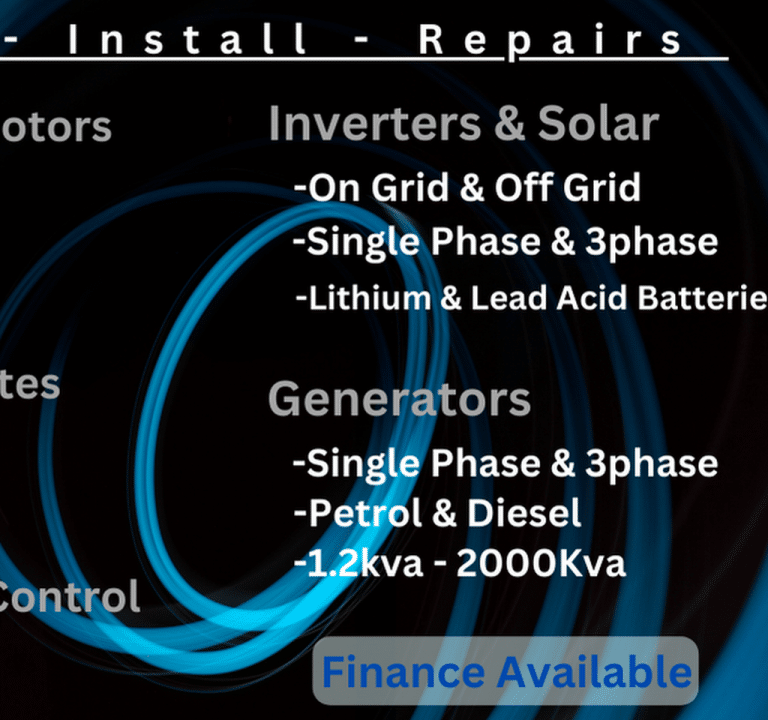
From the verifiable content, the core service areas align with off‑grid electricity, off‑grid water, and cooling solutions. Although specific details about inverter and UPS offerings are not explicitly enumerated on the available pages, the broader portfolio implies the provision of integrated systems that enable continued power supply, water independence, and climate control within off‑grid setups. The emphasis appears to be on end‑to‑end solutions—from initial concept through to finalised installations—designed to help customers realise off‑grid living or business operations.
Customer experience, as inferred from the site, centres on a streamlined pathway for project initiation and completion. Basic contact points are listed, including a telephone number and an email address, suggesting a process built around direct communication to discuss requirements, feasibility, and configuration options. The presence of a dedicated “Electricity” section within the site’s navigation indicates an emphasis on solar‑driven power systems and related technologies as a primary service category.
Typical engagements appear to be project‑based, covering the design and installation of off‑grid solutions for homes or small to medium‑sized commercial applications. While the exact job types are not itemised in detail, the service categories imply work across renewable electricity generation, water autonomy, and cooling—areas commonly encountered in off‑grid projects in regional South Africa. The business model seems oriented toward enabling customers to reduce grid dependence and to manage resource usage more effectively in environments where utility reliability may be a concern.
Based on the content available, the user journey for a typical request would involve initial contact via phone or email, a consultation to assess site conditions and energy goals, and a tailored plan that outlines the recommended off‑grid components and system configuration. The next steps would likely cover site measurements, equipment selection (including solar modules, inverters, storage, pumps, and cooling components where applicable), installation scheduling, and quality checks to ensure system performance aligns with expectations.
Practical tips for customers
- Prepare a clear description of energy needs, peak usage times, and any essential loads to help shape the design of an off‑grid system.
- Provide property dimensions, roof or yard space, and shading considerations to optimise solar performance and cooling placement.
- Ask for a visualisation or schematic of the proposed system to understand how electricity, water, and cooling components will interact.
- Inquire about maintenance requirements and typical service intervals for inverters, batteries, and related equipment to maximise system longevity.
- Clarify warranty terms, expected system lifespans, and post‑installation support arrangements to avoid surprises.
Location and accessibility
The accessible contact details indicate a base with a Bella‑Bella address and a South African phone number. While explicit hours of operation are not published on the available pages, customers may expect to engage during standard business hours through the primary contact channels listed on the site.
Notes on scope and accuracy
As the available content does not explicitly name Unplugged Renewable Energy or provide in‑depth specifications for inverters and UPS systems, the summary references the broader off‑grid service framework presented on the site. Readers are advised to verify precise offerings, location details, and any region‑specific considerations directly with the provider. The information here reflects the content accessible on the source site and any visitor feedback that is publicly available.
What to expect from an off‑grid project
Projects in the off‑grid category typically involve a collaborative design phase, engineering of power and water systems, on‑site installation, commissioning, and performance verification. A successful engagement results in a cohesive system that supports critical loads, with a clear plan for operation, maintenance, and potential scalability. The approach emphasises practical, purpose‑built solutions tailored to the site’s geography and usage patterns.
East London
Eastern Cape
South Africa
Sorry, no records were found. Please adjust your search criteria and try again.
Sorry, unable to load the Maps API.
Inverters and UPS: Solar Energy Services in East London, Eastern Cape
In East London, Eastern Cape, businesses and households increasingly rely on inverters and uninterruptible power supply (UPS) systems to manage energy reliability and maximise the value of solar installations. Service providers in this region offer a range of solutions designed to accommodate varying load requirements, from small offices to larger commercial premises, all aligned with local electrical regulations and safety standards.
Inverters are the heart of many solar energy setups. They convert the direct current (DC) produced by solar panels or stored in batteries into alternating current (AC) suitable for lights, equipment, and appliances. UPS systems, by contrast, provide a controlled and immediate power reserve to critical loads during short interruptions or outages. Together, these technologies help maintain productivity, protect sensitive equipment, and reduce the risk of data loss or operational downtime.
Providers typically begin with an on-site assessment to understand peak load, essential circuits, available roof or ground space, and the local grid connection status. This assessment informs the design of a customised solution that may include grid-tied inverters, off-grid or hybrid configurations, and a suitable battery storage strategy. The goal is to balance cost, reliability, and environmental impact while considering South Africa’s unique energy landscape and municipal infrastructure.
Customers can expect a comprehensive service pathway that covers planning, installation, commissioning, and ongoing maintenance. Projects often address both domestic homes and commercial buildings, with attention to safety, compliance, and efficient energy use. The availability of training, after-sales support, and warranty terms may vary by provider, but skilled technicians typically prioritise safe cable routing, proper ventilation for battery enclosures, and adherence to electrical codes.
Practical considerations frequently discussed during consultations include:
- Battery type and longevity, with attention to depth of discharge, charging cycles, and temperature sensitivity.
- SystemSizing: aligning inverter capacity and battery storage with actual or anticipated loads to avoid over- or under-provisioning.
- Management of energy during cloudy periods or at night, including the role of storage versus grid import.
- Protection features such as anti-islanding, surge protection, and automatic cut-off in fault scenarios.
- Maintenance needs, including thermal management, regular health checks, and battery replacement timelines.
For East London customers, the regional climate and demand patterns can influence equipment choices. Local installers may emphasise robust cooling solutions, secure mounting for wind-swept rooftops, and resilient wiring practices suitable for coastal environments. The availability of service coverage for routine inspections and emergency response is also a practical factor in selecting a provider, ensuring minimal disruption during outages or repairs.
Inverters and UPS services typically support a spectrum of applications, from ongoing business continuity plans to renovating a premises’ energy strategy with solar. While specific product brands or advanced software platforms are not assumed, reputable installers usually provide clear explanations of how the system operates, the expected performance during day and night cycles, and the steps involved in bringing a project from conception to operation. The emphasis remains on safe, compliant installations that help customers capitalise on solar energy while safeguarding essential operations.
Overall, the market in East London, Eastern Cape, offers practical, standards-aligned solutions for those seeking reliable power in a solar-enabled future. By choosing an experienced provider, customers can expect a well-planned system, transparent guidance on options, and dependable ongoing support tailored to regional needs.
If this is your business, please click the button below to claim it.
By claiming the listing, you will be able to edit it, and add your own text, images, videos and business hours
Please use this listing as an advertisement for your business. It is provided for Free.