

Transtech Africa Global is a Satellite communication service establishment in Lanseria, Gauteng, South Africa
Transtech Africa Global: Satellite communication and power infrastructure solutions in Lanseria
Transtech Africa Global (TAG) operates as a specialist systems integrator located in Lanseria, Gauteng, offering a focused blend of power infrastructure and satellite solutions for telecommunications networks across Africa. Established in 2005 and commencing trade in 2006, TAG has developed a reputation for delivering reliable power and connectivity solutions to large GSM operators, as well as expanding its footprint to include major corporate clients and tower companies. The company’s approach emphasises staying small enough to care while remaining large enough to meet diverse customer needs.
The organisation combines expertise in power systems with satellite readiness, positioning itself to support both International Gateways and in-country network infrastructure. This dual focus enables TAG to address the specific energy requirements that accompany satellite and telecom deployments in challenging environments, ensuring continuity of service even in remote locations.
Main services offered
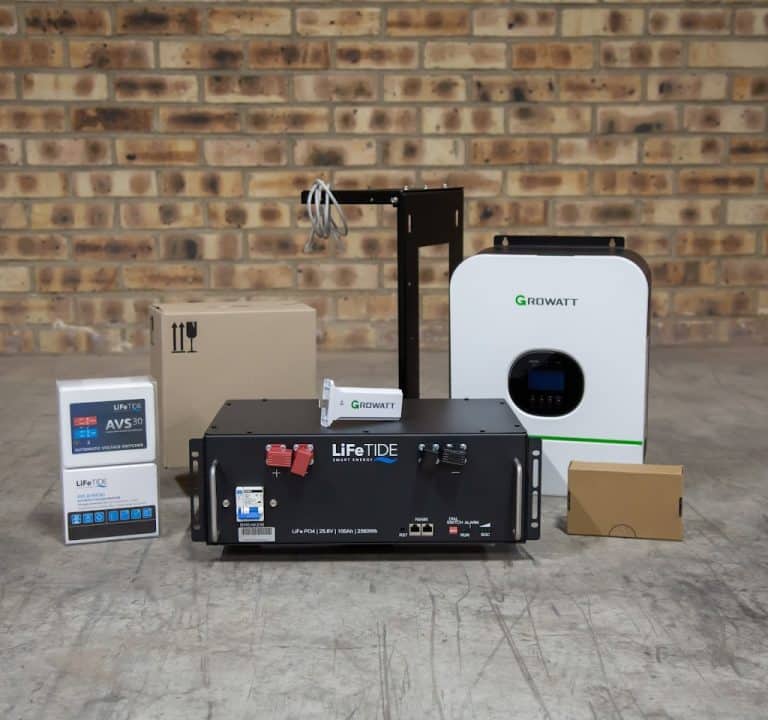
- <strongPower solutions for telecom infrastructure: TAG provides comprehensive power provisioning for remote sites, leveraging the latest technologies in photovoltaic (PV) systems, batteries, solar and hybrid configurations. The aim is to maintain uninterrupted telecom operation and minimise downtime through dependable energy storage and generation arrangements.
- <strongSatellite and telecom hardware support: The product portfolio includes a range of telecom hardware such as high-security cabinets, rectifiers, DC power systems, PV charging controllers and associated infrastructure designed for secure and resilient deployment at satellite-enabled sites.
- <strongFull turnkey solar power solutions for telecoms: From large-scale solar installations to hybrid systems, TAG offers end-to-end design, engineering and deployment to match site requirements and regulatory constraints.
- <strongHybrid and all-in-one systems: Hybrid power configurations combine solar with generators and energy storage, with secure enclosures and scalable power management, suitable for difficult access and grid-unstable sites.
- <strongSite security and surge protection: Customised protection, including lightning and surge protection, tamper-resistant enclosures, and anti-theft measures to safeguard critical telecom equipment.
- <strongUrban and rural deployment readiness: Solutions are described as adaptable to “uniquely African conditions,” with options ranging from ultra low-cost sites to full turnkey systems for challenging terrains and remote locations.
In addition to these core offerings, TAG highlights its capability to design, manufacture and assemble customised rectifiers, and to provide projects that span from design through to commissioning. The portfolio shows serious emphasis on energy independence for telecom sites, including battery solutions and PV panels designed to fit within site constraints while meeting load requirements.
Typical job types and industries
TAG’s portfolio indicates a focus on telecommunications operators and large corporate networks across Africa, including remote rural deployment projects and site upgrades. Typical engagements include:
- Rural and remote telecom base stations requiring reliable solar-hybrid power solutions.
- International gateway and in-country satellite network support paired with robust energy systems.
- Upgrade projects involving battery swops, rectifier installations and PV integration for ongoing network resilience.
- Concealed pole mounts and custom exteriors for secure, theft-resistant installations in challenging environments.
Project examples referenced include rural and remote deployments in the Democratic Republic of Congo and similar markets, with emphasis on scalable energy solutions and rapid deployment capabilities.
Customer experience and testimonials
Customer feedback featured on TAG’s materials emphasises reliability, efficiency and world-class engineering. Verbatim snippets include appreciation for a team capable of designing and installing systems suitable for remote locations, and recognition of efficiency and creativity in delivering projects on time and within budget. One reviewer notes that TAG’s engineers demonstrated “world-class” capability, underscoring a high level of technical proficiency and project management.
How requests typically work and practical tips
TAG presents itself as a turnkey partner, offering design-to-deployment services for power and satellite-enabled telecom sites. Prospective clients can expect a process that starts with design and sizing to fit site requirements, followed by engineering, procurement and deployment. The company’s offerings also include ongoing monitoring capabilities through remote management systems integrated into solar and hybrid solutions.
Practical tips for customers include:
- Clarify site constraints early, including space, wind loading, and existing infrastructure, to tailor the power solution accurately.
- Consider long-term operational costs and fuel or maintenance implications when evaluating hybrid versus all-solar approaches.
- Request details on tamper-resistant enclosures and security features to protect critical equipment in vulnerable locations.
- In remote deployments, prioritise solutions with remote monitoring interfaces to enable proactive maintenance and rapid fault detection.
- Discuss scalability from the outset to accommodate potential future load growth or additional satellite capacity.
Location and service area
TAG is based at 642 Amelia Lane, Corporate Park, Lanseria, 1739, Gauteng, South Africa, and the scope of work covers Africa, including cross-border telecom and satellite projects where secure, reliable power supply is essential for uninterrupted satellite communications and mobile networks.
Lanseria
Gauteng
South Africa


Sorry, no records were found. Please adjust your search criteria and try again.
Sorry, unable to load the Maps API.
Satellite Communication Services in Lanseria, Gauteng
In Lanseria, Gauteng, satellite communication services are increasingly utilised to connect businesses and organisations that require dependable, wide-area connectivity beyond the reach of traditional terrestrial networks. These services are typically deployed to support remote sites, disaster recovery arrangements, broadcast needs, and enterprise backhaul, offering resilience where fibre or copper networks are incomplete or vulnerable to disruption.
Providers operating in the Lanseria area usually offer a range of satellite-based solutions designed to suit different operational requirements. Common offerings include point-to-point and star configurations that link remote locations back to a central hub, as well as shared satellite bandwidth arrangements for smaller businesses. Solutions are commonly used for internet access, secure data transmission, voice over IP, and video conferencing, enabling continuous communication for organisations with sites outside major urban cores or in areas with challenging terrain.
Typically, the way satellite communication services function involves a ground-based dish or antenna at each customer site, together with a modem and a stable link to a satellite in orbit. The inbound and outbound data traffic is modulated into a radio signal, transmitted to the satellite, and then beamed down to a ground station that routes traffic to the wider internet or a private network. At the Lanseria end, installations are designed to align with local site conditions, including space for equipment, power supply reliability, and security considerations. Ongoing management may be performed by a service provider or a dedicated network operations centre, depending on the service level agreement in place.
Pragmatic considerations influence service choices in this region. Latency, while higher than terrestrial networks, can be acceptable for specific applications such as remote monitoring or bulk data transfer, but may be noticeable for real-time services like certain kinds of video calls. Weather and atmospheric conditions can affect signal quality, particularly during heavy rain. To mitigate interruptions, many clients employ robust monitoring, automatic failover to alternate communication paths, and bandwidth management practices to prioritise critical traffic when capacity is constrained. Local regulatory requirements and licensing obligations may also shape installation processes and ongoing compliance.
Businesses in Lanseria may evaluate satellite communications for several practical reasons. For operations with multiple sites dispersed across rural or peri-urban areas, satellite links can provide a reliable backbone where fibre is not feasible or is cost-prohibitive. In industries such as mining support services, agriculture, and remote enterprise offices, satellite connectivity can support essential data exchange, remote application access, and emergency communications. Organisations with seasonal or project-driven activity may utilise satellite backhaul to maintain continuity during peak periods or network upgrades on landlines. In addition, regional broadcasters and media organisations sometimes rely on satellite services to distribute programming or coordinate live events where terrestrial networks are insufficient.
When planning a satellite solution in Lanseria, attention is often given to installation logistics, including the physical footprint, securing outdoor equipment, and ensuring uninterrupted power supplies. Service levels, network uptime guarantees, and responsive maintenance are critical factors, as is the ability to scale bandwidth in line with changing requirements. Clients typically receive guidance on best practices for router configurations, network segmentation, and security measures to protect data traversing the satellite link. The resulting service enables connectivity that supports daily operations, while offering the flexibility to adapt as technological needs evolve.
- Ground segment considerations: site readiness, equipment placement, and power supply.
- Service characteristics: latency, bandwidth, redundancy, and uptime expectations.
- Operational factors: weather impacts, monitoring, and maintenance routines.
- Practical uses: remote sites connectivity, disaster recovery, broadcasting, and backhaul.
If this is your business, please click the button below to claim it.
By claiming the listing, you will be able to edit it, and add your own text, images, videos and business hours
Please use this listing as an advertisement for your business. It is provided for Free.