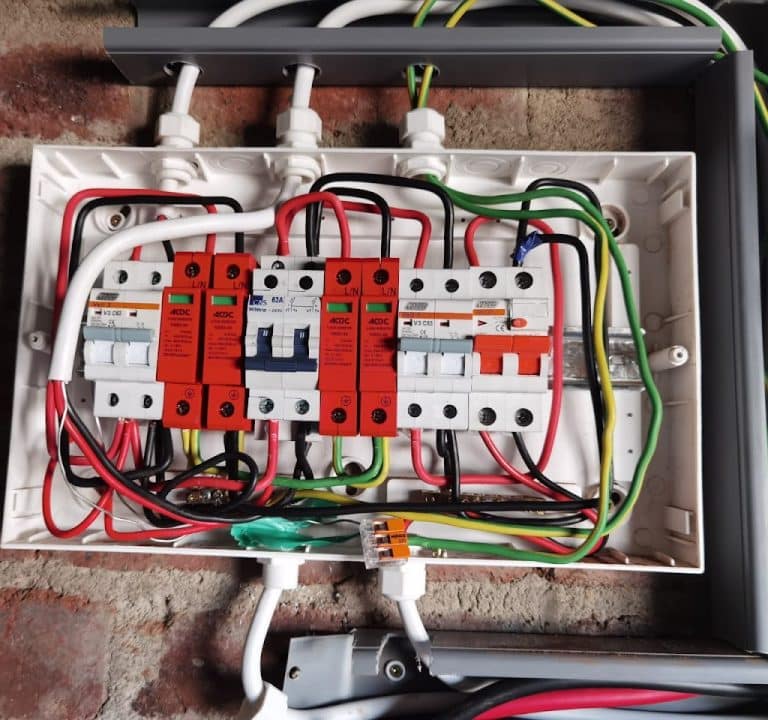
The TREC is a Solar energy company establishment in Lydenburg, Mpumalanga, South Africa
The TREC (The Renewable Energy Company): Overview of Services and Customer Experience
The TREC, known as The Renewable Energy Company, presents itself as a provider focused on solar energy solutions. The company’s positioning centres on delivering solar-related services in a manner that emphasises honesty and transparency. The online footprint highlights a commitment to ensuring customers are not asked to pay for services or products that are not necessary, and it stresses straightforward, transparent quotes and explanations for all offerings.
User-facing content on the site points to a core aim of assisting clients with enquiries related to solar energy. The emphasis across the site is on accessibility for those seeking information or quotes, with standard contact pathways provided to initiate discussions about project needs. While the site itself does not publish a detailed service menu, the visible messaging suggests that attention is given to providing information and guidance to prospective customers considering solar energy installations or investments, and to facilitating a clear dialogue through its contact channels.
From a customer-experience perspective, the site positions The TREC as a deliberative partner rather than a high-pressure seller. The core principles stress fair treatment, transparency in quotes, and avoidance of hidden charges. This framing implies that customers can expect a communication style that prioritises clarity, with straightforward explanations about what is being proposed and why it is necessary. The emphasis on not misleading customers about their needs indicates a consultative approach intended to help buyers make informed decisions rather than to oversell services.
In terms of practical outcomes for clients, the experience suggested by the site is that enquiries are encouraged through accessible channels, with an emphasis on guiding visitors toward a quote or an initial discussion. The presence of a dedicated contact route implies a structured process whereby initial questions can be addressed, requirements gathered, and prices and timelines discussed in a transparent manner. Where a visitor is seeking preliminary information, the site’s tone is educational and direct, aiming to set clear expectations from the outset.
Typical job types and project scope
Due to the limited explicit detail on the site, there is no published, granular list of typical job types or industry sectors. The positioning as a solar energy provider allows for the reasonable assumption that projects could span residential, commercial, and small to mid-size commercial installations. However, without explicit statements from The TREC, these assumptions should remain general. The available information emphasises the initial enquiry and transparent quotation process rather than a detailed catalogue of services.
How requests typically work
Requests begin through the site’s enquiry channels, with a clear invitation to contact for more information or a quote. The process is framed around transparent communication and fair pricing. Prospective customers can expect to start with an information exchange, followed by a quotation that is explained openly, with a commitment to avoiding surprise charges. The emphasis on transparency suggests that the initial consultation aims to establish genuine needs and to present options that align with those needs and budget.
Practical tips for customers
- Prepare a brief outline of energy goals and current electricity usage to help inform a precise discussion.
- Ask for a breakdown of costs and the rationale for each item on a quote to ensure understanding and transparency.
- Request clarification on any recommended equipment, installation steps, and timelines to avoid ambiguity.
- Verify what is included in the quote (design, permissions, installation, maintenance, warranties) and what would incur extra charges.
- Compare quotes to assess value, ensuring that recommendations are aligned with actual needs rather than a high-pressure proposal.
Location and service area
The site presents The TREC as a solar energy provider within South Africa, with a thematic focus on renewable energy. While specific town-by-town service lists are not published on the site, the business operates within the broader context of Mpumalanga and related regions where solar energy solutions are in scope. The visitor-facing information is designed to guide potential clients to a straightforward enquiry path to begin discussions about projects and quotations.
Overall, The TREC’s online presentation portrays a company that prioritises transparent pricing, honesty in assessments, and a customer-centric approach to solar energy discussions. For readers in Mpumalanga considering solar investments, the site offers an entry point for information and a pathway to obtain a quote through a straightforward contact process.
Lydenburg
Mpumalanga
South Africa


Sorry, no records were found. Please adjust your search criteria and try again.
Sorry, unable to load the Maps API.
Solar Energy Services in Lydenburg, Mpumalanga
In Lydenburg, Mpumalanga, solar energy providers offer a range of services aimed at helping homes, farms, and small businesses harness the power of the sun. Local operators understand the regional climate, the typical energy demands of rural and semi-urban properties, and the practical steps required to implement a reliable solar solution. Customers can expect guidance from initial assessment through to ongoing support, with emphasis on safety, efficiency, and long-term value.
A typical project begins with an on-site assessment to determine energy consumption patterns, available roof or ground space, and the local solar resources. The assessment informs a system design tailored to meet daily load requirements, whether that involves generating electricity for daytime use, enabling partial or full off-grid operation, or complementing existing electrical infrastructure. Considerations often include shading, orientation, roof condition, electrical panel capacity, and the potential for future expansion. These evaluations aim to deliver a practical balance between system size, cost, and return on investment.
Design and installation services commonly cover the following elements:
- System sizing and layout planning, including the arrangement of solar panels, inverters, and battery storage where appropriate.
- Electrical beading and safety upgrades to support a stable, code-compliant solar installation.
- Roof or ground mounting solutions suitable for local conditions and weather patterns.
- Integration with existing electrical systems, enabling seamless operation alongside standard utility power.
- Inspection and commissioning to verify performance, safety, and adherence to relevant standards.
Battery storage is a frequent addition for customers seeking greater energy resilience. Battery systems can provide power during cloudy days or after sunset, helping to smooth out consumption and reduce peak grid demand. The choice of storage capacity, technology type, and charging strategy depends on daily usage, space availability, and budget. For some clients, a hybrid approach—combining solar generation with limited battery storage—offers a practical compromise between reliability and upfront cost.
Maintenance and aftercare constitute a core component of service delivery. Routine checks typically cover module cleanliness, electrical connections, inverter health, and battery status where applicable. Preventive maintenance helps sustain efficiency, extend equipment life, and minimise unexpected outages. Many providers offer service packages that include periodic inspections, performance reporting, and emergency response options, subject to regional logistics and warranty terms.
Customers in Lydenburg may also receive guidance on connection considerations with the local grid, tariff structures, and any procedures required by municipal or national authorities. Depending on the project, advice may be provided regarding permitted uses, incentives, and documentation needed for permits or compliance. The emphasis remains on transparent explanations of options, practical expectations for energy generation, and clear timelines for delivery and commissioning.
Practical considerations for solar energy projects in this region include climate, weather patterns, and the availability of suitable mounting surfaces. Lydenburg's sunny conditions generally support effective solar generation, while seasonal rainfall and wind can influence system maintenance and component selection. Prospective customers are encouraged to obtain written quotations that outline system specifications, installation schedules, and any service commitments, ensuring a well-informed decision-making process.
If this is your business, please click the button below to claim it.
By claiming the listing, you will be able to edit it, and add your own text, images, videos and business hours
Please use this listing as an advertisement for your business. It is provided for Free.