

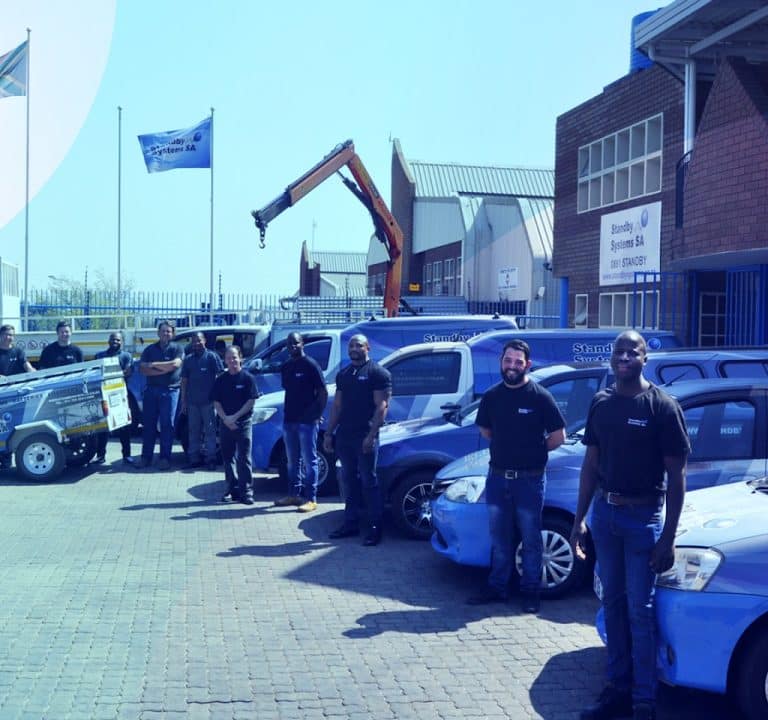
Standby Systems (Pty) Ltd is a Electrical engineer, Inverters and UPS establishment in Honeydew, Gauteng, South Africa
Standby Systems (Pty) Ltd — Electrical engineering, inverters and UPS solutions in South Africa
Standby Systems is described as a highly specialised South African company focused on uninterruptible power supply (UPS) systems and emergency power back‑up. Since 2003, the business has positioned itself as a dedicated provider of a broad range of UPS solutions, batteries and related equipment, with a stated footprint that encompasses Africa. The company’s product range spans UPS systems, inverters, battery banks and a variety of supportive accessories designed to protect critical electrical loads against power interruptions.
Core offerings centre on UPS systems that cover the spectrum from small, offline and line‑interactive configurations to larger, online double conversion plants. The portfolio includes single‑ or three‑phase UPS power solutions, parallel UPS arrangements for higher capacity, and rack‑mount or modular systems to suit data centres, offices and industrial environments. The product lines indicate an emphasis on reliable power back‑up for communications, IT infrastructure, and industrial applications where continuous operation is essential.
Standby Systems also markets an extensive range of battery options and change‑out services. The battery category includes UPS‑specific batteries, VRLA (valve-regulated lead‑acid) varieties, deep‑cycle, industrial, solar applications and specialised configurations such as short and extended run‑time packs. A notable emphasis is placed on leading brands and battery technologies suitable for cyclic and float applications, with references to HRL (High Rate Long Life), thin plate pure lead, and lead‑carbon options. This breadth supports varying lifecycle expectations, from short‑term resilience to long‑term uptime commitments.
In addition to UPS hardware, the company highlights voltage stabilisers and Riello components—such as communication interfaces, transfer switches and network monitoring tools. The inclusion of Riello Static Transfer Switches (STS) and automatic transfer switches reflects an capability to design and implement resilient power paths for critical loads, including PDU (power distribution unit) setups and modular, scalable infrastructure. The product mix signals an integrated approach that combines power generation back‑up with intelligent monitoring and control.
Maintenance and support are implied through the presence of a dedicated “UPS & Battery Maintenance” offering, suggesting services that may cover routine checks, battery testing and replacement planning. The materials suggest a lifecycle‑oriented service model, aimed at ensuring not only the availability of uninterruptible power but also the continued reliability of battery banks and associated components.
Customers seeking Standby Systems can expect a solution designed around accommodating a wide range of environments—from smaller office operations to substantial corporate or industrial installations—while retaining a focus on emergency power reliability. The description of products and services indicates flexibility to accommodate various load profiles, including potentially complex installations that require coordinated UPS, inverter systems and monitoring interfaces.
Typical project types (as implied by the product lines) may include: standby power for IT and data centre applications, telecommunications and network infrastructure, industrial processes requiring uninterrupted power, and commercial or residential settings adopting solar integration with backup power provisions. The Riello ecosystem and networking interfaces point to projects that benefit from remote monitoring and system visibility, enabling proactive maintenance and rapid fault diagnosis.
Practical tips for customers planning a UPS or inverter project include considering the following:
- Define the critical loads and required uptime to determine the appropriate UPS rating (VA/kVA) and configuration (offline, line‑interactive, or online/double conversion).
- Assess battery types and lifecycle expectations to balance upfront cost with long‑term reliability and maintenance needs.
- Explore integration with monitoring interfaces (such as Riello Netman or similar tools) for real‑time visibility and proactive maintenance scheduling.
- Plan for scalability, particularly when considering modular or parallel UPS arrangements to accommodate growth or shifting load profiles.
Standby Systems indicates a footprint across Africa, suggesting capabilities to support regional deployments and potentially on‑site assessments, installation and service across the continent. The company’s focus on a comprehensive product set—ranging from UPS systems and batteries to stabilisers, inverters and communication interfaces—highlights an end‑to‑end approach to reliable power protection.
Geographically, the reference point commonly associated with the business is the Gauteng region, with the overall service area described as Africa‑wide. The equipment and services appear suited to businesses seeking resilient, managed power solutions that minimise downtime and protect critical operations in the face of power instability.
Honeydew
Gauteng
South Africa


Sorry, no records were found. Please adjust your search criteria and try again.
Sorry, unable to load the Maps API.
Electrical Engineer, Inverters and UPS Services in Honeydew, Gauteng
In the Honeydew area of Gauteng, South Africa, electrical engineers specialising in inverters and uninterruptible power supplies (UPS) provide a range of essential services designed to safeguard critical electrical systems against power interruptions. Businesses and households alike increasingly rely on resilient power solutions to maintain operations, protect equipment, and ensure continuity during load shedding and unstable supply conditions. Local professionals bring expertise in design, installation, maintenance, and fault diagnosis, all tailored to the unique energy landscape of the region.
Typical offerings include the assessment of power quality and reliability needs, the selection of appropriate inverter and UPS configurations, and the design of systems that integrate with existing electrical infrastructure. Engineers in this arena often evaluate factors such as load profiles, battery technologies, runtime requirements, and the potential for future expansion. The resulting installations aim to balance efficiency, cost, and reliability while complying with local electrical standards and safety practices. A qualified professional will usually plan for safe siting of equipment, proper ventilation, and secure cable management to minimise risks and maximise uptime.
Inverter and UPS services commonly cover several core stages. An initial site survey identifies critical loads and backup priorities. A detailed design follows, outlining the type and size of inverters, batteries (such as sealed lead-acid or lithium-based options), and the configuration of the UPS system. Installation encompasses wiring the units into the electrical distribution, integrating automatic transfer switching or seamless transfer routes, and implementing monitoring devices to track performance. Commissioning then validates that the system operates as intended, with staged testing to confirm quiet operation, correct switching, and appropriate protection settings for faults or overloads.
Maintenance and support represent a substantial portion of ongoing requirements. Regular inspections check battery health, inverter cooling, and connections, while firmware updates and parameter adjustments help sustain optimal performance. In Honeydew, engineers emphasise safety and compliance, ensuring that all work conforms to the relevant South African electrical codes and local municipal requirements. Preventive maintenance plans are commonly offered to pre-empt failures, reduce downtime, and extend the life of power protection equipment. Where needed, professionals provide guidance on battery replacement schedules, environmental considerations for storage, and end-of-life disposal in line with environmental regulations.
Customers can expect practical considerations to influence decision-making. The choice between a pure sine wave inverter versus a modified sine wave model, for instance, depends on the sensitivity of connected equipment. Similarly, UPS systems may be selected for their ability to deliver short-term reserve during grid disturbances, provide conditioning for critical electronics, or offer longer runtimes for essential processes. System sizing takes into account peak demands, the number of critical circuits, and the desired level of redundancy. In addition, local factors such as load shedding patterns, solar compatibility, and potential future expansions inform recommendations. Energy storage technologies and charging strategies are discussed to balance performance with total cost of ownership.
For businesses and residents seeking dependable power protection in Honeydew, the service narrative typically stresses clear communication, precise documentation, and transparent budgeting. Clients are advised to obtain a comprehensive plan that outlines system capabilities, maintenance responsibilities, response times for faults, and the expected lifespan of components. By focusing on tailored electrical protection, modern inverter and UPS solutions help ensure continuity, safeguard important equipment, and provide peace of mind amid the Power Delivery environment characteristic of Gauteng.
- Site assessment and load analysis
- System design and component selection (inverters, UPS, batteries)
- Installation and integration with existing electrical systems
- Testing, commissioning, and training on basic operation
- Preventive maintenance and fault diagnosis
- Battery management and end-of-life planning
If this is your business, please click the button below to claim it.
By claiming the listing, you will be able to edit it, and add your own text, images, videos and business hours
Please use this listing as an advertisement for your business. It is provided for Free.

