
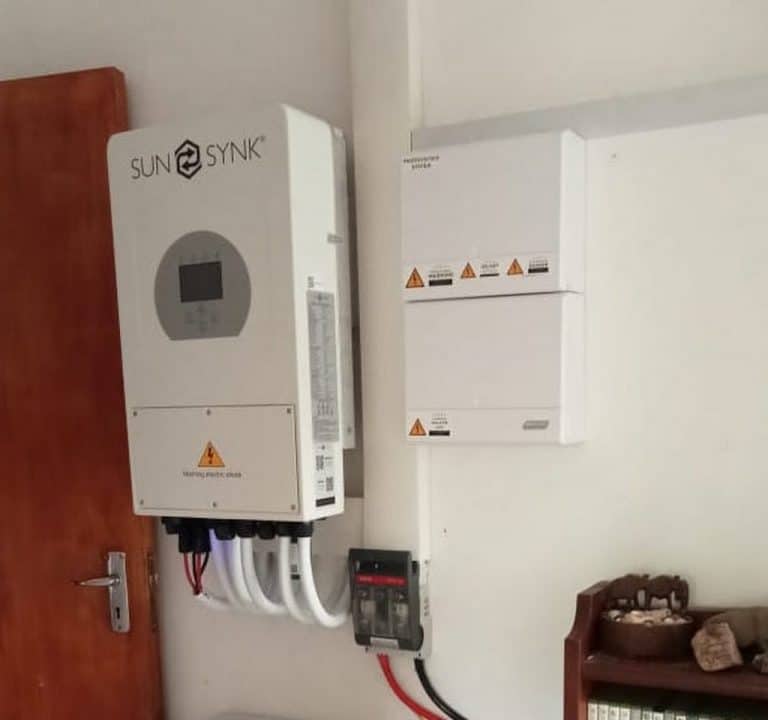
Solar Solutions Garden Route is a Inverters and UPS, Solar energy company establishment in Pretoria, Western Cape, South Africa
Solar Solutions Garden Route: Inverters and UPS – Services and Customer Experience
Solar Solutions Garden Route presents itself as a local solar engineering and design partner, offering tailored energy solutions for residential, commercial and industrial settings. The company centres its approach on a preliminary on-site assessment, where power requirements and budget are discussed in depth. This site inspection is used to design a custom solar system that aligns with the specific lifestyle or business operation, aiming to balance performance with affordability. The emphasis is on working with the customer to identify a practical configuration rather than applying a one-size-fits-all installation.
In the category of inverters and UPS, the business highlights two principal service areas. The first is grid-tied solar systems, described as the most cost-effective option within the market. These systems operate by converting solar-generated direct current (DC) to match the alternating current (AC) demand of the grid. The inverter autonomously tracks and synchronises with the utility grid, enabling energy production without the need for batteries or energy storage devices. This arrangement positions the grid-tied setup as a straightforward and potentially budget-friendly entry point into solar power for many customers.
The second service focus is solar system installation. The provider undertakes installation work for customers who have selected a system and wish to have it professionally fitted in compliance with national regulations. The installation process is framed as a skilled and motivated endeavour, with the company emphasising its passion for delivering high-quality workmanship. The offering combines technical design, system fitting and ensuring regulatory alignment to support a reliable and compliant solar solution.
Customer experience is framed through a collaboration model. The entity stresses its ability to design systems that fit both budget and daily life, supported by a team described as talented and dedicated to customer service. While the content does not list specific customer milestones or certifications, the narrative suggests a commitment to guiding clients from initial assessment through to a fully realised solar solution. The organisation markets itself as a partner that will help customers realise the advantages of solar energy, including potential financial benefits and environmental improvements.
Typical job types and industry applications are communicated by describing residential, business and industrial energy needs. The emphasis is on scalable solutions that can be tailored to different scales of operation, from homes seeking to reduce electricity bills to commercial premises aiming to manage operating expenses or meet sustainability goals. The grid-tied approach is presented as suitable for contexts where immediate cost efficiency is a priority and where the customer is prepared to operate without energy storage. The information implies flexibility in project scope, depending on the site and the required power capacity.
When considering a project, customers can expect a process that includes information gathering, design planning and a transparent discussion of budget. The company positions itself as a design-and-fit partner, rather than merely a supplier of components. This perspective is reinforced by the claim of an innovative design approach and a focus on customer service that is described as highly committed. The service proposition places emphasis on delivering a custom system that integrates smoothly with existing electrical infrastructure and meets applicable regulations.
Practical tips for customers exploring solar inverters and UPS solutions include starting with a site inspection to establish accurate power requirements, incentives and feasible system configurations. It is prudent to consider whether a grid-tied system aligns with needs and whether energy storage is essential for critical loads. Customers should also weigh initial installation costs against potential savings and tax considerations. With respect to South African conditions, potential buyers may find value in understanding how a solar solution could influence utility bills, property value and environmental impact over the system’s lifespan, which is often cited by solar providers as a long-term benefit.
- Ask for a clear plan detailing how the system will be designed to meet the site's energy profile and budget.
- Confirm that the installation will adhere to national regulations and safety standards.
- Clarify whether the solution is grid-tied only or includes an energy storage component for essential loads.
- Discuss potential financial aspects, such as depreciation or tax considerations relevant to commercial installations.
- Plan maintenance and future scalability in the design to accommodate possible increases in energy demand.
Geographically, the focus is described as serving clients within the Western Cape, with particular emphasis on residential or commercial settings that aim to improve energy resilience and cost efficiency. While explicit business hours or best times to visit are not listed on the provided content, potential customers are encouraged to engage in initial consultations to explore possibilities, obtain pricing, and understand the design options available for grid-tied solar power systems and professional installation.
Pretoria
Western Cape
South Africa


Sorry, no records were found. Please adjust your search criteria and try again.
Sorry, unable to load the Maps API.
Inverters and UPS Solutions for Solar Energy in Pretoria and the Western Cape
Independent energy providers in Pretoria and the Western Cape offer a range of services centred on inverters, uninterruptible power supplies (UPS), and solar energy systems. These services typically address both commercial and residential needs, from system design and installation to ongoing maintenance and performance optimisation. Clients frequently seek dependable power where mains electricity is unreliable or expensive, with a focus on clean, renewable generation combined with backup capacity for critical loads.
Core offerings commonly include site assessment and load analysis to determine the appropriate inverter rating and UPS specification. Trained professionals evaluate electrical infrastructure, future expansion plans, and daily power requirements to recommend a suitable solar and storage solution. This preliminary work helps ensure that the selected equipment can handle peak demand periods, cope with frequent outages, and integrate smoothly with existing electrical panels and distribution boards.
Inverter services typically cover the selection and installation of devices that convert DC power from solar panels or batteries into usable AC electricity. Standalone inverters, hybrid inverters with dual inputs for solar generation and battery storage, and grid-tied configurations are commonly considered. In addition to installation, service providers may offer calibration and programming to optimise charging profiles, battery health monitoring, and safe transfer of loads during grid interruptions. Ongoing diagnostic checks help identify performance drift, enable timely maintenance, and extend the lifespan of both the inverter and connected storage.
UPS offerings focus on protecting essential equipment from power interruptions and stability issues. Providers often supply modular or stand-alone UPS units designed for servers, critical lighting, security systems, and medical or lab equipment. The service typically includes cabinet or wall-mount installation, battery lifecycle assessment, automatic voltage regulation, and switchover testing to minimise downtime. Regular servicing ensures battery health, firmware updates where applicable, and verification that the UPS remains within its efficiency and environmental guidelines.
Solar energy companies in these regions frequently bundle inverter and UPS capabilities with solar panel installations or retrofits. Integrated systems aim to maximise self-consumption, optimise charge and discharge cycles, and deliver reliable backup power during outages. Consumers can expect guidance on battery types, cycle durability, and maintenance plans that align with local climate conditions and electricity tariffs. Practical considerations often addressed include system enclosure safety, cable sizing, cooling requirements, and compliance with regional electrical standards.
Customers are typically informed about the importance of proper installation and professional wiring to ensure safety and performance. A typical project may involve securing relevant permits, coordinating with the electrical grid where grid-tied components are present, and confirming warranty terms and service agreements. After installation, routine maintenance visits may include battery health checks, inverter firmware updates, filter inspections, and performance reporting to confirm that the system continues to meet design expectations.
Inverter and UPS services in Pretoria and the Western Cape emphasise reliability, resilience, and optimisation. The practical outcome is a trusted energy solution that supports essential loads, enhances energy security, and contributes to longer-term energy cost management. While the exact configurations vary, the overarching objective remains steady: to deliver efficient, safe, and scalable power solutions that align with local conditions and customer needs.
- Site assessment and load analysis
- Inverter sizing and installation
- Hybrid and standalone solar configurations
- UPS selection, installation, and maintenance
- Battery health monitoring and lifecycle management
- System integration with electrical panels and safety measures
If this is your business, please click the button below to claim it.
By claiming the listing, you will be able to edit it, and add your own text, images, videos and business hours
Please use this listing as an advertisement for your business. It is provided for Free.