
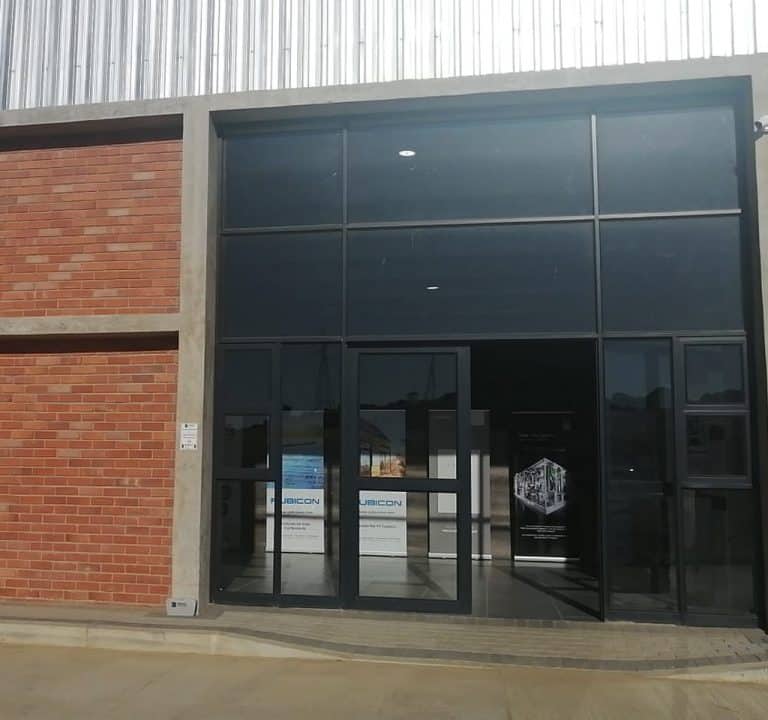
Rubicon East London is a Distribution service, Inverters and UPS establishment in East London, Eastern Cape, South Africa
Rubicon East London: Distribution services for Inverters and UPS in East London, Eastern Cape
Rubicon operates as a provider of energy solutions and related components with a strong emphasis on inverters, energy storage, and associated electrical systems. While information specific to East London in the Eastern Cape is not explicitly itemised on the main site, the company’s product ranges and service descriptions indicate a focus on distribution, installation-ready packages, and after-sales support for energy conversion and storage technology. The business presents itself as a supplier of scalable solutions suitable for commercial and residential applications, with a portfolio that includes inverters, storage, charging equipment, and mounting systems.
The distribution service demonstrated through Rubicon’s online store and product collections centres on a curated selection of inverters and energy storage components. The Inverters collection features a variety of models designed for solar PV integration and hybrid operation. Notable offerings include high-voltage and multi-MPPT configurations, capable of supporting larger solar installations and storage systems. The Solis HV 50 kW inverter, for example, is described as having multiple MPPTs, robust current handling, and operational modes geared toward optimised self-use and generator interactions. This indicates a distribution approach that targets mid- to large-scale solar deployments where efficient energy management and reliable performance are critical.
Complementing the inverters, the Batteries and Energy Storage category provides pathways to grid-tied or off-grid storage, with modules and cabinets from recognised vendors. The array includes storage solutions compatible with hybrid systems, as well as modular battery kits intended for commercial and industrial usage. The presence of battery cabinets and various storage configurations points to a distribution strategy that supports turnkey or modular project delivery, enabling installers and end customers to select units that fit both capacity requirements and space constraints.
Another facet of Rubicon’s offering is the EV charging segment, which emphasises home charging solutions designed to integrate with grid or solar energy systems. While aimed at domestic use, these chargers reflect a broader capability to distribute electrical components that tie into a holistic energy management approach. The pricing and product breadth suggest a channel through which trade partners and installers can source dependable charging infrastructure alongside inverters and storage.
In terms of project delivery, the site communicates a workflow that aligns with standard e-commerce and distribution practices: selecting products from online collections, placing orders, and receiving items with options for local pickup or delivery. Where stock is temporarily unavailable, expectations are set for processing timelines, and delivery estimates accommodate the logistics of warehouse operations. The catalog also hints at integrated bundles and solutions (Energy Kits) that combine inverters, batteries, and related accessories, underscoring a capability to provide ready-made solutions for customers seeking end-to-end distribution channels rather than single-component shopping.
Customer experience is reinforced by a structured product range, clear product specifications, and a focus on reliability and compatibility across energy products. The company highlights products that support autonomous energy management and flexible operation modes, which is particularly relevant for customers prioritising resilience and energy security. The emphasis on after-sales support and validation processes in the lighting and energy solution lines reinforces a supportive service model that extends beyond mere product procurement.
Typical job types and applications implied by the available content include design-led installations for commercial premises seeking robust inverters and storage solutions, retrofits for residential solar plus storage systems, and the deployment of EV charging infrastructure for homes or smaller commercial sites. Projects would likely involve integration with solar PV configurations, battery storage capacity planning, and system commissioning to ensure harmonious operation of inverters, storage, and charging hardware.
Practical tips for customers considering Rubicon’s distribution offerings:
- Clarify capacity needs early: assess daily energy use and peak demand to determine the appropriate inverter size and storage capacity.
- Check compatibility: confirm the inverter, battery, and charger specifications work together within the intended solar or hybrid system.
- Consider installation context: residential, commercial, and industrial sites have different mounting, wiring, and cooling considerations that influence component choice.
- Plan for future expansion: select modular solutions or scalable kits (Energy Kits) to accommodate growth or evolving energy needs.
- Balance cost with resilience: higher-efficiency inverters and larger storage kits can yield long-term energy savings and reliability benefits.
- Review delivery timelines: stock levels and warehouse processing times affect project planning; account for local pickup or delivery in project schedules.
- Engage with installers: coordinate with qualified installers to ensure correct integration, commissioning, and safety compliance for all components.
Overall, Rubicon’s distribution focus in inverters, energy storage, and related automotive and lighting solutions presents a cohesive offering for customers seeking reliable energy management components. The combination of smart inverter technology, modular storage options, and accessible charging equipment supports a broad range of installations across various sectors, with an emphasis on efficiency, compatibility, and practical after-sales support.
East London
Eastern Cape
5241
South Africa


Sorry, no records were found. Please adjust your search criteria and try again.
Sorry, unable to load the Maps API.
Distribution Services, Inverters and UPS in East London, Eastern Cape
In East London, Eastern Cape, businesses rely on a combination of distribution services, uninterruptible power supply (UPS) systems and inverters to ensure steady operations, protect sensitive equipment and maintain seamless service delivery. Providers in this region typically offer a spectrum of solutions that cover the flow of electrical power from primary supply to end-user load, alongside specialist equipment to bridge gaps during outages or interruptions to mains supply.
Distribution services in this context refer to the planning, management and execution of electrical power distribution from central sources to commercial and industrial sites. This includes sourcing appropriate hardware, coordinating delivery to site, and supporting the integration of distribution networks with building electrical systems. The process often emphasises reliability, scalability and compatibility with existing infrastructure, with attention paid to load requirements, fault tolerances and ongoing maintenance needs. For many organisations, distribution specialists act as the backbone of power resilience, ensuring that energy is delivered safely and efficiently to critical operations.
Inverters and UPS solutions form a complementary layer that protects against power interruptions. Inverters convert DC power, such as that stored in batteries, into usable alternating current to supply equipment during outages or voltage dips. UPS units provide immediate short-term power protection, maintaining voltage stability and enabling orderly equipment shutdowns or seamless handovers to backup generation. In East London, a range of options is commonly available, from compact, on-site units suitable for office electronics to larger, scalable systems designed to support manufacturing lines or data-processing equipment. Installers typically assess peak load, battery technology, runtime requirements and the physical space available before recommending a configuration.
Customers can expect a structured approach that begins with a site survey to record power profiles, critical circuits and potential nuisance tripping. Based on these findings, providers present practical layouts, installation timelines and cost implications. Installations often involve upgrading or reconfiguring electrical panels, aligning with safety standards and electrical regulations. Maintenance plans are a key feature, offering routine inspections, battery health checks, thermal management reviews and firmware or controller updates where applicable. Warranties and service level agreements commonly accompany equipment commissioning to support predictable long-term performance.
In the Eastern Cape, considerations specific to East London include local load patterns, climate-related effects on equipment and the proximity to service networks. Heat, humidity and irregular power quality can influence battery life and cooling requirements, making proper ventilation and temperature control a priority for both UPS enclosures and inverter assemblies. Access to parts, technician response times and the ability to scale systems as a business grows are practical factors guiding selections. Security of equipment, noise levels, and the footprint of modular systems are additional concerns for urban and semi-urban installations.
Operational expectations from distribution, inverter and UPS services typically centre on reliability, clear communication and transparent planning. Clients should look for: a clearly documented scope of work; schedule and milestones; test procedures to verify performance; and instructions for emergency situations. It is prudent to ask about maintenance windows, spare parts availability and the credentials of technicians. While installation details and branding may vary, the overarching goal remains consistent: to deliver dependable power distribution while safeguarding critical assets and enabling rapid recovery from power disturbances.
Overall, East London providers position themselves to support businesses across sectors such as offices, workshops and light manufacturing, offering tailored advice on system sizing, installation, commissioning and ongoing support. By combining distribution expertise with robust inverter and UPS solutions, organisations can achieve improved uptime, better power quality and greater resilience in the face of an evolving electrical landscape.
- Site survey and load assessment
- Design and installation of distribution panels and protection
- UPS selection, configuration and commissioning
- Inverter sizing for standby and backup power
- Battery technology options and maintenance planning
- Ongoing maintenance, testing and emergency support
If this is your business, please click the button below to claim it.
By claiming the listing, you will be able to edit it, and add your own text, images, videos and business hours
Please use this listing as an advertisement for your business. It is provided for Free.