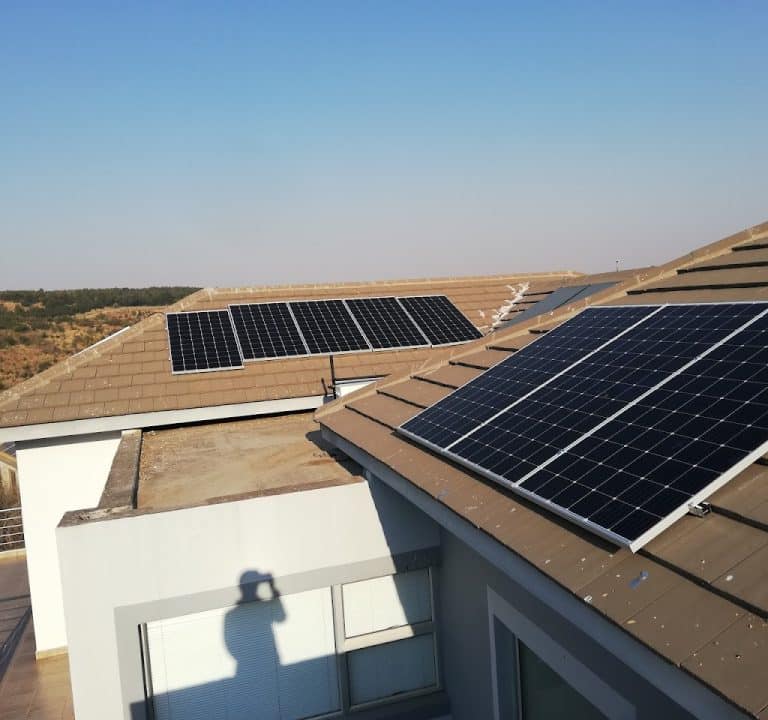


Ikhono Energy is a Inverters and UPS, Training centre establishment in Pretoria, Gauteng, South Africa
Pretoria
Gauteng
South Africa
Sorry, no records were found. Please adjust your search criteria and try again.
Sorry, unable to load the Maps API.
Inverters and UPS Training Centre Services in Pretoria, Gauteng
The Pretoria region in Gauteng hosts a range of training and support facilities focused on inverters and uninterruptible power supply (UPS) systems. These centres cater to aspiring technicians, facilities managers, electrical engineers and business owners seeking practical, industry-aligned instruction on power protection, energy storage and reliable backup solutions. The services typically cover both theory and hands-on practice, enabling attendees to understand how inverters and UPS units integrate with current electrical infrastructures and building management systems.
Core offerings often include introductory courses that explain the fundamentals of power electronics, battery technologies and the distinctions between different backup power solutions. Participants learn how inverters convert direct current (DC) from batteries into alternating current (AC) suitable for running essential equipment, while UPS devices prioritise short-term power continuity, safeguarding sensitive loads during transitions or outages. Training programmes may also address the roles of line-interactive and online double-conversion UPS technologies, including practical considerations such as efficiency, thermal management and routine maintenance requirements.
Practical laboratory sessions form a central part of many courses. Trainees typically work with representative equipment to observe charging cycles, fault diagnosis, voltage regulation and switchgear operation under simulated disturbances. These exercises illuminate the importance of proper sizing and coordination between power sources, battery banks and critical loads. Guidance on wiring practices, earthing, and safety standards is commonly provided, ensuring participants recognise the risks associated with high-energy systems and the need for compliant installation and testing procedures.
Beyond technical instruction, training centres often deliver modules on system design and project execution. Learners may study how to perform load assessment, determine backup durations, and select appropriate inverter and UPS models for various applications—residential, commercial or industrial. The curriculum commonly includes considerations for battery technology choices (such as lead-acid, AGM or Lithium-ion), lifecycle management, and the impact of ambient temperature on battery performance. Emphasis is placed on planning for maintenance intervals, performance monitoring and contingency planning for critical operations.
Additionally, business-focused services are frequently offered to assist organisations planning to deploy or upgrade power protection solutions. These may encompass assessment visits to understand existing electrical infrastructure, recommendations for capacity upgrades, and guidance on integrating UPS systems with power distribution boards and automatic transfer switches. Customers can expect a consultative approach that emphasises reliability, scalability and total cost of ownership, rather than merely the acquisition of equipment. Some centres also provide testing and commissioning support as part of a broader project, ensuring new systems operate correctly and safely within the site’s electrical environment.
When engaging with a Pretoria-based training centre, potential participants should consider practical factors such as course duration, level of prerequisite knowledge, and the balance between classroom theory and hands-on practice. The availability of up-to-date equipment, access to real-world demonstrations, and the inclusion of safety and compliance content are important for effective learning. It is also prudent to verify whether the centre offers customised programmes for organisations with specific industrial or regulatory requirements, as well as opportunities for ongoing professional development to reflect evolving technologies and standards.
From the customer perspective, expectations typically include clear learning objectives, structured curricula, knowledgeable instructors, and a supportive learning environment that emphasises safety. Graduates should emerge with a solid understanding of how to select appropriate power protection solutions, interpret technical specifications, and perform basic installation, testing and maintenance tasks. For businesses, the practical outcome often involves enhanced resilience against power interruptions, improved uptime for critical equipment, and a clearer pathway towards planned upgrades or expansions of on-site power systems.
- Typical outcomes: foundational knowledge, hands-on skills, and a framework for evaluating UPS and inverter needs within a local deployment.
- Common considerations: device sizing, battery management, safety practices, maintenance scheduling, and integration with existing electrical systems.
- Delivery style: a blend of theory, practical lab work, case studies, and interactive discussions to mirror real-world scenarios.
If this is your business, please click the button below to claim it.
By claiming the listing, you will be able to edit it, and add your own text, images, videos and business hours
Please use this listing as an advertisement for your business. It is provided for Free.