
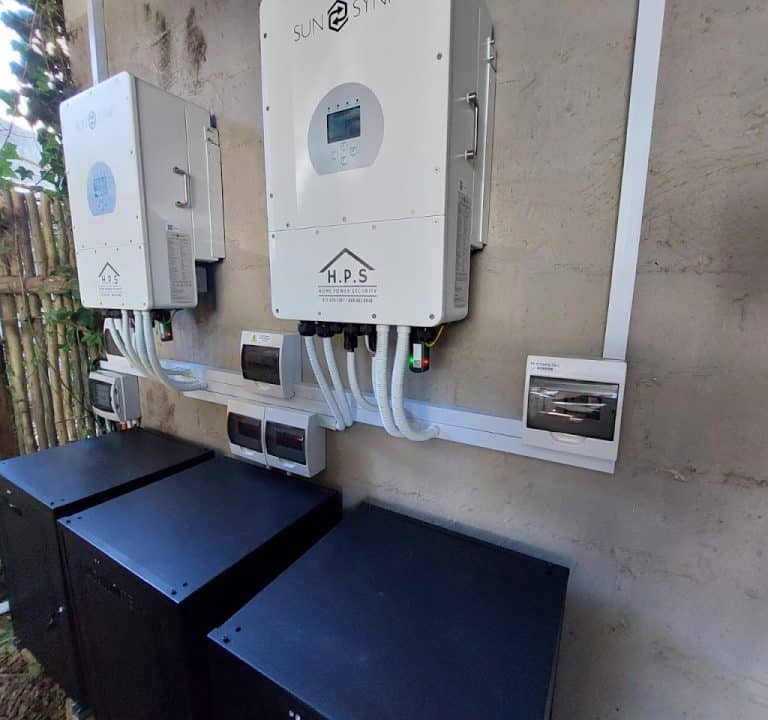
HPS Solar is a Inverters and UPS, Solar energy company establishment in Pretoria, KwaZulu-Natal, South Africa
HPS Solar: Inverters, UPS and Solar Solutions in South Africa
HPS Solar specialises in designing, procuring and installing customised energy systems for residential and commercial properties, with a focus on solar power and backup generation. The company emphasises power security, aiming to reduce electricity bills and mitigate the effects of load shedding and grid instability. The service offering includes turnkey solar and generator solutions that are tailored to individual budgets and site requirements, with an approach that covers from initial assessment through to installation and after-sales support.
The core offering blends solar photovoltaic (PV) arrays with energy storage and, where appropriate, backup generators. Residential systems can be configured as starter setups to cover essential loads or as larger installations that enable a higher level of self-sufficiency. In the commercial arena, HPS Solar positions solar as a practical means to reduce operating costs, with the option to grid-tie daytime loads and integrate with generators to avoid downtime during outages. The inclusion of generators is presented as a complementary choice, useful for heavy equipment or settings where uninterrupted power is critical.
All installations are designed, procured and installed by HPS Solar, a practice which the company argues contributes to reliability, better oversight, and smoother commissioning. The team notes an emphasis on using quality products that comply with South African National Standards (SANS) and International Standards. A Certificate of Compliance is obtained for electrical work, underscoring a commitment to safe, regulation-compliant installations. The business also highlights a customer-centric ethos, prioritising practical, cost-effective, and dependable outcomes while offering after-sales service and support.
From the perspective of customer experience, the company highlights an educational dimension to help clients understand system operation and consumption patterns. This is framed as part of a broader journey towards energy independence, with attention paid to aligning system design with users’ daily habits and budget constraints. A notable testimonial from a KwaZulu-Natal client describes professional conduct and a thorough explanation of options, contributing to a positive post-installation outcome.
Typical job types and areas served
- Residential solar and backup systems, ranging from essential-load backups to larger, self-sufficient homes.
- Commercial solar installations designed to cut electricity expenditure and improve reliability for business operations.
- Generator installations and maintenance, including servicing across various system sizes for both homes and businesses.
- Hybrid configurations combining PV, battery storage and generators to provide resilience during outages and grid instability.
- Turnkey project management including design, procurement, installation and after-sales support.
Locations highlighted by the company in its materials point to Hilton, KwaZulu-Natal, with broader service knowledge that suggests an ability to support residential and commercial customers seeking alternative energy solutions in South Africa. The emphasis on regulatory compliance and high-quality components signals a commitment to durable systems capable of withstanding local conditions.
How requests typically work
Prospective clients begin with an assessment of energy usage, habits and budget, followed by a tailored design that specifies the scope of the PV array, energy storage options and backup generation where relevant. The process typically includes procurement of components and a full installation, completed by qualified personnel. After installation, the company offers ongoing support and maintenance to help ensure system performance and safety over time.
Practical tips for customers
- Consider whether a hybrid system with batteries is appropriate for night-time power and extended outages, or if a grid-linked solution with a generator is a more economical fit.
- Plan for essential loads first (lights, refrigeration, communications) to determine required battery storage and inverter capacity.
- Ensure any installation is signed off with a Certificate of Compliance by a qualified electrician for safety and regulatory compliance.
- Discuss long-term service plans and spare-part availability to minimise downtime and maximise system longevity.
- Respect the climate and grid conditions where the system is installed; higher solar yield areas benefit from larger PV capacity and storage arrangements.
Notes on hours and local presence
Official communications do not specify public opening hours. The business is described in terms of its services and regional focus, with Hilton (KwaZulu-Natal) appearing as a key contact point, suggesting a presence or service familiarity in KwaZulu-Natal. For those seeking a local partner to design a turnkey solar or backup solution, HPS Solar positions itself as a practical, customer-focused option with emphasis on education, quality products and after-sales service.
Further considerations
HPS Solar stresses alignment with South African regulatory standards and international best practices, aiming to deliver reliable power security for homes and businesses amidst the modern grid’s fluctuations. Customer experiences highlighted in the company narrative point to professionals who take the time to explain options clearly and tailor solutions to individual needs, with a sentiment of ongoing partnership beyond installation.
Pretoria
KwaZulu-Natal
South Africa


Sorry, no records were found. Please adjust your search criteria and try again.
Sorry, unable to load the Maps API.
Inverters, UPS and Solar Energy Services in Pretoria, KwaZulu-Natal
In the Pretoria region of KwaZulu-Natal, businesses and households frequently rely on specialist providers to deliver dependable power solutions centred on inverters, uninterruptible power supplies (UPS) and solar energy systems. Independent installers and energy firms typically offer a broad range of services designed to ensure continuous operation, efficient power management and resilience against interruptions caused by grid instability, load fluctuations or weather events.
Core offerings usually begin with a professional site assessment and load analysis. A technician examines current electrical loads, peak demand, and critical equipment to determine an appropriate inverter size and battery capacity. The aim is to match energy storage and generation to the specific needs of the premises while accounting for future expansion and potential changes in usage. This initial step often includes a review of existing electrical infrastructure, alignment with local grid requirements, and guidance on feasible solar integration paths for on-grid, off-grid or hybrid configurations.
Installation services cover the integration of solar PV panels, inverters, and battery storage with the property’s electrical system. Inverters are selected to convert DC power from solar panels or batteries into usable AC electricity, with attention to efficiency, compatibility with existing circuits, and safety standards. UPS units provide rapid transition to stored energy during outages, protecting sensitive equipment from power interruptions and voltage sags. Installations may also include charge controllers, wiring, mounting hardware, monitoring devices, and protective features such as surge protection and proper earthing. Technicians typically ensure compliance with electrical regulations and perform commissioning tests to verify correct operation.
Solar energy providers in this area often emphasise system modularity and future scalability. Customers can expect guidance on expanding solar capacity or storage as budget and requirements evolve. Some projects involve hybrid systems that blend solar generation with the existing grid and battery storage, enabling energy at critical times and reducing dependence on mains supply. In all cases, the emphasis remains on reliability, safety, and predictable power delivery rather than mere equipment purchase.
Maintenance and aftercare form an important portion of the service landscape. Regular inspections, software or firmware updates for monitoring equipment, battery health assessments, and proactive fault detection are common components. Most providers offer service agreements that include routine check-ups, diagnostic reporting, and fault response windows. This support helps identify ageing batteries, degraded inverter components, or suboptimal charging profiles before they lead to interruptions or reduced performance.
Practical considerations frequently highlighted to customers include the importance of proper battery selection and lifecycle expectations. Battery longevity is influenced by depth of discharge, charging cycles, ambient temperature and regular maintenance. Inverter efficiency and thermal management are also critical, especially in environments with high daytime temperatures or steady solar input. Additionally, many projects consider displacement and black-out resilience, taking into account load prioritisation for essential circuits and safe manual operation in the event of system fault.
Customers can typically expect transparent budgeting and clear explanations of options such as mains backup (UPS) versus solar-backed systems, anticipated payback periods, and warranty coverage. While pricing, exact product names and supplier lists vary by provider, the overarching aim remains to deliver a dependable energy solution that protects critical equipment, saves on electricity costs, and supports business continuity in Pretoria and the surrounding KwaZulu-Natal region.
If this is your business, please click the button below to claim it.
By claiming the listing, you will be able to edit it, and add your own text, images, videos and business hours
Please use this listing as an advertisement for your business. It is provided for Free.