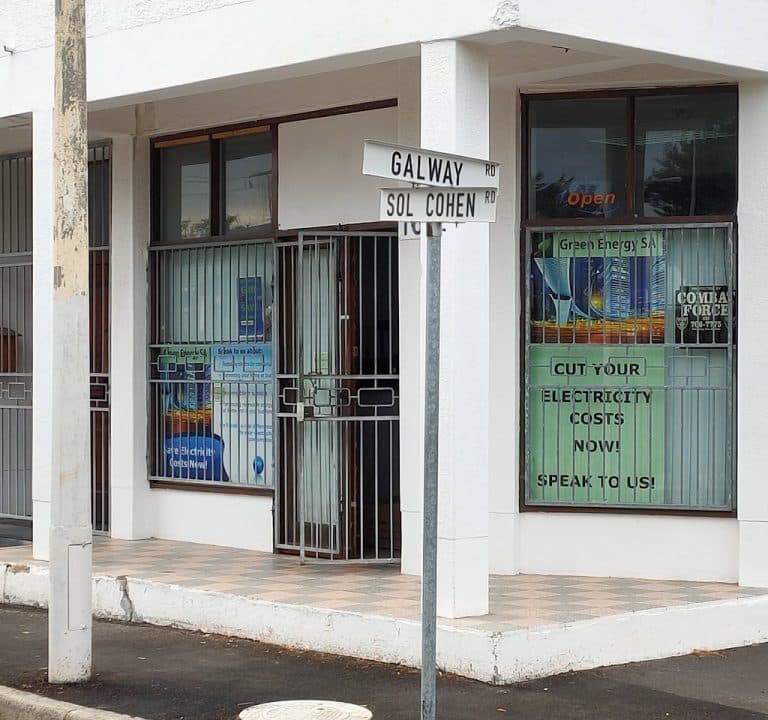
Green Energy SA is a Inverters and UPS, Solar energy company establishment in Cape Town, Western Cape, South Africa
Green Energy SA — Inverters, UPS and Solar Power Solutions in Cape Town
Green Energy SA presents itself as a Cape Town–based supplier focused on battery-backed power systems, solar panels, wind generators, and related storage technologies. The company positions itself as an accessible source for those seeking to reduce reliance on the electrical grid by combining renewable energy generation with reliable energy storage. The core offering revolves around powering homes and small businesses with 220-volt electricity drawn from stores of stored energy and renewable sources, rather than from the national grid.
The principal product categories highlighted include battery backup systems, solar panels, wind generators, and a range of batteries and super capacitors. The emphasis across these offerings is on enabling independent or semi-independent electricity supply, particularly during loadshedding or when conventional supply is unreliable. The range of products is described as suitable for various scales of installation—from small, plug‑and‑play configurations to larger systems that are designed to charge batteries through multiple sources.
In the battery backup category, Green Energy SA highlights rechargeable, battery-driven power systems that deliver 220-volt power via inverters and uninterruptible power supplies (UPS). A notable feature for some offerings is the availability of plug‑and‑play solutions designed to be set up without the need for a professional installation technician. This approach suggests an option for customers seeking straightforward, DIY-friendly upgrades to resilience and continuity of power in their premises.
Solar panels form another key pillar of the company’s catalogue. The content indicates a range of solar panels—from small to large—and notes that these panels can be arranged and connected in multiple configurations. The implication is that different voltages and battery charging arrangements can be created to suit diverse energy needs, whether for residential or commercial applications.
Wind generators are also marketed as part of the off-grid mix. These devices are described as capable of providing power in both low and high wind conditions and can be installed on rooftops, poles, or on the ground. They are commonly presented as complementary to solar to enhance battery charging for off-grid energy storage, with specific examples suggesting capability in very low wind environments.
To support energy storage, the company supplies a variety of batteries and super capacitors. These storage devices are described as compatible with inverters and UPS systems, enabling power supply to continue when grid power is unavailable. Recharging options include mains electricity and solar or wind inputs, indicating a multi-source strategy to extend the duration of off-grid operation. The mention of super capacitors as notable storage devices provides a hint at more advanced energy storage considerations, though precise technical specifications are not disclosed on the overview page.
The site also dedicates space to explaining what “off the grid” means. It describes off-grid living as not being connected to Eskom or municipal power, using renewable energy sources such as solar and wind to generate all required power. The discussion reflects a response to load-shedding, rising electricity costs, and climate-change considerations, framing the approach as a pragmatic pathway for households and businesses to gain energy autonomy. Practical guidance suggests starting with affordable, small-to-medium battery backup equipment and then expanding over time as needs and budgets allow.
How requests typically work, as conveyed by the content, appears to follow a consultative approach: potential customers are encouraged to discuss options with experts, enabling tailored recommendations. Contact portals are provided for engaging with the team, reinforcing that the process begins with a conversation to determine the most suitable mix of panels, batteries, inverters or wind charging options for the specific property and energy goals.
Typical projects and industries
- Residential off-grid or partially off-grid setups, focusing on load-shedding resilience and 220 V power delivery.
- Small to medium commercial applications seeking affordable energy storage and backup power during outages.
- Rural or remote locations where grid access is limited or unreliable, with hybrid storage strategies combining solar, wind and batteries.
Practical tips for customers
- Assess daily energy use and peak power requirements to determine appropriate inverter size and battery capacity.
- Consider a staged approach: begin with a plug-and-play backup system and expand with additional panels, batteries or wind charging as circumstances allow.
- Explore multiple charging sources (grid, solar, wind) to maximise resilience and reduce downtime during outages.
- Factor in available space for solar panels and the feasibility of mounting wind generators if wind conditions are suitable.
- Discuss maintenance and spare parts availability to ensure long-term reliability of the installation.
Geographically, the content positions Green Energy SA within the Western Cape, with a focus on Cape Town and surrounding areas. The information conveys an emphasis on practical, user-friendly, and scalable energy solutions designed to address load-shedding and rising electricity costs, while promoting customer empowerment through do-it-yourself-friendly options alongside expert guidance.
For readers considering their energy future, the information suggests a flexible framework: begin with attainable, affordable storage and generation options, and grow the system as power needs evolve. This approach aligns with a broad trend towards resilient, renewable-powered households and small businesses seeking greater energy independence in South Africa.
Cape Town
Western Cape
South Africa


Sorry, no records were found. Please adjust your search criteria and try again.
Sorry, unable to load the Maps API.
Inverters, UPS and Solar Energy Services in Cape Town, Western Cape
In the Cape Town area, providers of solar energy solutions commonly offer a range of services centred on reliable power supply, energy resilience, and efficient energy use. Inverters and Uninterruptible Power Supplies (UPS) form a core part of these offerings, ensuring that homes and businesses can maintain essential operations during grid interruptions or peak demand periods. The service landscape typically combines assessment, installation, maintenance, and aftercare designed to suit local conditions such as coastal humidity, heat, and occasional loadshedding patterns.
Assessment and design are foundational steps. Specialists evaluate electrical load profiles, peak consumption, and critical circuits to determine appropriate inverter capacity and UPS backing. Considerations include whether the focus is on back-up power for essential circuits, overall load shifting to reduce daytime electricity costs, or PV-integrated systems that harvest solar energy for daytime use and battery storage for night-time or outage protection. In many cases, clients receive a solution proposal that aligns with budget, space constraints, and future scalability. The Cape Town climate and solar resource profile often influence equipment selection, with attention given to reliability, efficiency, and the ability to operate in varying temperatures.
Installation typically involves safe integration with existing electrical infrastructure. Technicians install inverters to convert DC solar energy or battery energy into usable AC power, while UPS units are configured to bridge short-term outages and protect sensitive electronics from voltage drops or surges. Common steps include securing appropriate mounting, cabling, and isolation from the main supply where required, plus configuring protection features such as short-circuit protection, automatic transfer to back-up power, and battery management if applicable. Local regulations and electrical standards guide the installation process to ensure safe, compliant operation. Space considerations, ventilation, and cable routing are weighed to maintain equipment longevity and performance in a coastal environment.
Maintenance and servicing provide ongoing protection for an investment in inverter and UPS technology. Routine checks often cover battery health, charge-discharge cycles, inverter efficiency, cooling systems, and firmware or software updates where relevant. Preventative maintenance helps identify potential issues before failures occur, reducing downtime and extending equipment life. In some cases, service providers offer battery replacement or refurbishment options as part of a long-term energy strategy. Regular servicing is particularly important in South Africa’s climate, where battery life can be influenced by ambient temperatures and charging conditions.
Operational expectations for customers revolve around reliability, efficiency, and clear indications of performance. During outages, a properly configured UPS should provide immediate transfer to backed-up power, while the inverter draws from solar or stored energy to sustain critical loads. In grid-tied solar systems with battery storage, energy management strategies may prioritise daytime consumption of solar energy, reduce grid draw during peak periods, and optimise battery discharge cycles. Users can generally anticipate clear guidance on system monitoring, load management, and what to expect in terms of run-time during outages, subject to system size and battery capacity.
Practical considerations include cost implications, space requirements, and local support networks. The size of the system, battery chemistry, and the intended duty cycle influence both purchase decisions and long-term maintenance. Environmental conditions such as humidity and salt exposure are considered when selecting components and protective enclosures. For those in Cape Town, service providers commonly emphasise responsive aftercare, available remote monitoring where appropriate, and the ability to perform on-site troubleshooting with minimal disruption to operations. Overall, the landscape in the Western Cape supports a pragmatic approach: solutions are designed to deliver dependable back-up power, optimise solar utilisation, and extend the life of electrical assets in a cooperative, standards-driven framework.
- Site assessment and load analysis
- Inverter selection and installation
- UPS configuration for critical circuits
- Battery storage planning and integration
- Maintenance, inspections, and battery replacement planning
- System commissioning and performance monitoring
If this is your business, please click the button below to claim it.
By claiming the listing, you will be able to edit it, and add your own text, images, videos and business hours
Please use this listing as an advertisement for your business. It is provided for Free.