
Fine Blanking (Pty) Ltd is a Manufacturer establishment in Johannesburg, Gauteng, South Africa
Fine Blanking (Pty) Ltd — Summary of Services and Customer Experience
Fine Blanking (Pty) Ltd sits within a family of specialised engineering entities that offer a broad spectrum of metalworking capabilities. As observed from the company’s online presentation, the organisation emphasises precision in metal pressings and related services, supported by a range of complementary processes designed to deliver finished components with tight tolerances for demanding applications. The emphasis appears to be on engineering-led solutions that cover both production and the tooling phases, ensuring that components can be produced consistently to specification.
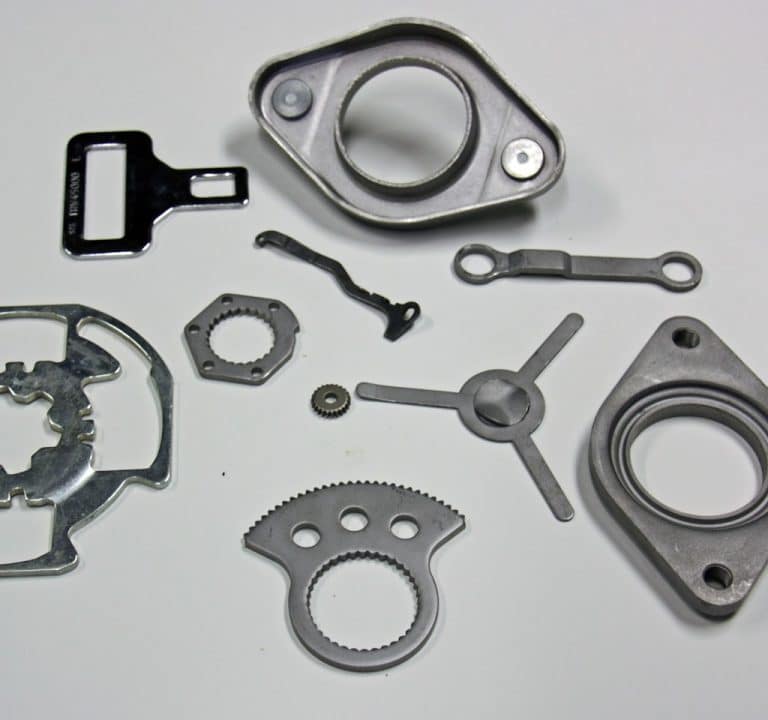
The core services highlighted on the company’s site cover several interconnected manufacturing disciplines. First and foremost is Metal Pressings using Fine Blanking, which is positioned as a key capability for producing high-precision metal parts. In addition to fine blanking, conventional metal pressings are offered, indicating a capability to accommodate a variety of press forming approaches depending on part geometry and production requirements. Tool, Jig & Die-Making forms an essential part of the offering, underscoring the importance of upfront tooling design and manufacture in achieving repeatable results in production runs. This combination suggests a focus on parts that require intricate forming, accurate dimensions, and controlled finishing steps.
Precision finishing and secondary processes accompany the primary forming capabilities. The business highlights EDM spark and wire erosion, precision grinding, and vibratory deburring as part of the broader process chain. These finishing steps are typically used to achieve tight tolerances, refined surface finishes, and the removal of tooling marks or burrs that can accompany forming operations. The inclusion of these processes signals a readiness to handle parts where close dimensional control and surface quality are critical to function or assembly.
Industrial Lock Manufacturing is named among the service lines, indicating a focus on components integral to locking mechanisms and related hardware. The presence of this capability points to experience in producing reliable, functionally critical parts that often demand high repeatability and durability. Complementary services in the group include CNC Machining and Laser Cutting, which broaden the scope to machined features, close-fitting components, and parts created from various materials. The combination of fine blanking, conventional pressings, precision machining, and laser capabilities positions the company to manage both highly engineered assemblies and precision components in a single workflow—potentially reducing lead times and communication channels for clients.
The organisation is described as a group of companies comprising Fine Blanking (Pty) Ltd, Tri-Axis Engineering, and Lock and Component Manufacturers (Pty) Ltd. This structure suggests access to a wider set of engineering and manufacturing competences, including CNC lathe turning, CNC milling, CAD/CAM/CAD workflows, and the broader ecosystem of tooling and precision component production. The presence of Tri-Axis Engineering within the group particularly emphasises the ability to deliver precision machined components and design support, complementing the forming capabilities with advanced machining options.
From a customer experience perspective, the site positions its services around a comprehensive, integrated manufacturing approach. The mix of primary forming processes with high-precision finishing and machining indicates an emphasis on delivering finished, ready-to-assemble components rather than only raw parts. The range of services also implies that customers may benefit from a single supplier capable of handling end-to-end production—from tool design and manufacture through to final component finishing and assembly aids. The emphasis on tooling, EDM, precision grinding, and deburring can help mitigate common manufacturing challenges such as tolerance drift, surface imperfections, and post-forming handling.
Practical tips for customers considering Fine Blanking (Pty) Ltd include providing clear part drawings with tolerances and surface finish requirements, as well as any required heat treatments or material standards. Early engagement with tooling and die-making teams can help align expectations on lead times and tooling costs, especially for complex geometries that depend on fine blanking or secondary operations. Supplying a known production volume or anticipated run length can assist the engineering teams in selecting appropriate tooling, finishing processes, and machining strategies to optimise cost and delivery timelines. When dealing with assemblies that include locking components or precision machined parts, it is prudent to discuss compatibility with any related components early in the design phase to ensure fit and function across the entire assembly.
In summary, Fine Blanking (Pty) Ltd presents a composite capability that blends specialised metal pressings with a robust set of tooling, finishing, and machining services. Supported by affiliated engineering firms within the same group, the organisation appears well positioned to offer end-to-end metal component solutions, particularly for projects demanding tight tolerances, reliable performance, and integrated manufacturing workflows.
Johannesburg
Gauteng
South Africa


Sorry, no records were found. Please adjust your search criteria and try again.
Sorry, unable to load the Maps API.
Manufacturing Services in Johannesburg, Gauteng
Johannesburg, the economic hub of Gauteng, hosts a diverse range of manufacturing services designed to support local businesses across many sectors. Clients may encounter offerings from small precision workshops to larger contract manufacturers that operate with considerable process depth. The landscape emphasises adaptability, scalability, and close collaboration with customers to translate ideas into finished components, assemblies, or finished goods.
Common services in this category span several technical disciplines. Machining and metalworking are prevalent, including CNC milling and turning, precision grinding, and lightweight alloy fabrication. Welding and fabrication teams handle structural steel, media frames, enclosures, and custom components. Plastic and composite manufacturing covers injection moulding, extrusion, prototyping, and low-volume production for parts that demand intricate geometries or specific material properties. Surface finishing services, such as plating, painting, powder coating, and anodising, are often bundled with core manufacturing to deliver ready-to-use parts.
Contract manufacturing frequently combines multiple stages under one roof or through coordinated supplier networks. This can include sub-assembly, final assembly, testing, and packaging. Some facilities offer rapid prototyping using 3D printing or other additive processes to validate designs before committing to full-scale production. Quality control is typically integrated through inspection regimes, metrology, and document trails that support traceability and client specifications. In many cases, production planning emphasises batch size flexibility, repeatability, and efficient changeovers to accommodate evolving demand.
Industries served from Johannesburg cover a broad spectrum, such as mining, engineering, construction, automotive, consumer goods, and equipment maintenance. This variety shapes service expectations, with some clients prioritising fast turnaround, while others seek highly specialised components that require tight tolerances or rugged performance in harsh environments. Local suppliers often leverage regional logistical networks to manage distribution across South Africa and neighbouring countries, depending on client needs and sector requirements.
Practical considerations begin with site selection and capacity. Availability of skilled technicians, access to reliable power, and dependable transport infrastructure often influence project timelines and pricing. The regional energy landscape can affect production schedules, so many manufacturers implement contingency plans and energy-efficient practices where possible. Regulatory compliance, environmental responsibilities, and workplace safety practices are commonly observed, with emphasis on orderly operations and risk management. Local business etiquette and contract norms influence negotiation, lead times, and payment terms, as does the customary expectation for clear communication and regular progress updates.
How a typical manufacturing engagement unfolds is guided by structured workflows rather than platform-specific features. A client presents an initial brief, sometimes accompanied by drawings or specifications. A supplier responds with a preliminary feasibility assessment and a quotation, outlining material options, processes, estimated lead times, and any assumptions. Upon agreement, production planning begins, often including prototyping or pilot runs, which help confirm tolerances, fit, and function. Once samples pass review, larger volumes are scheduled, with quality control checkpoints, packaging, and delivery arrangements aligned with the client’s logistics requirements. Throughout the process, documentation such as drawings, material data, route sheets, and inspection records supports traceability and accountability.
Overall, customers engaging Manufacturer services in Johannesburg can expect a pragmatic blend of technical capability, workforce expertise, and practical problem solving. The emphasis remains on delivering reliable parts and assemblies that meet specifications, on time, and with clear communication about any challenges or changes that arise during production.
If this is your business, please click the button below to claim it.
By claiming the listing, you will be able to edit it, and add your own text, images, videos and business hours
Please use this listing as an advertisement for your business. It is provided for Free.