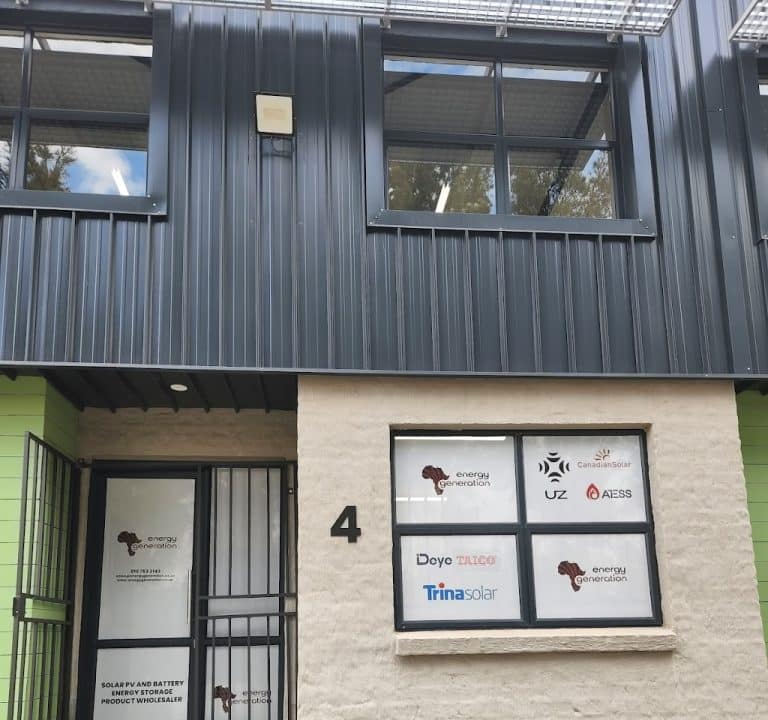

Enway Power Solutions (Pty) Ltd is a Inverters and UPS, Solar energy company establishment in Midrand, Gauteng, South Africa
Enway Power Solutions (Pty) Ltd — Inverters and UPS, Solar Energy
Enway Power Solutions (Pty) Ltd operates in the Inverters and UPS sector with a focus on solar energy solutions in Midrand, Gauteng, South Africa. The company presents a broad portfolio centred on hybrid and off‑grid power systems, combining inverters, lithium batteries and related components tailored to contemporary home and small business energy needs. The online assortment emphasises well‑established brands and battery storage options designed to integrate with solar generation and backup power architectures.
Core offerings include a selection of hybrid and off‑grid inverters, with a range of models suited to different power profiles. Inverters such as the Mecer Axpert and Luxpower variants feature across the catalogue, highlighting configurations for 5 kW to 12 kW capacities and 48 V systems. The emphasis appears to be on systems that support pure sine wave output and compatibility with a variety of batteries, including LiFePO4 chemistries, for resilient energy storage. The product pages suggest an interest in both standalone and hybrid installations, suitable for customers seeking reliable backup for outages or to optimise solar self‑consumption.
Battery storage is a prominent part of the offering, with LiFePO4 options including Dyness, HinaESS PowerGem and DEYE batteries represented. These batteries are presented with practical technical details such as nominal energy, voltage, and capacity, and are positioned as compatible with multiple inverter brands, subject to electrical specifications. The Dyness DL5.0C, for example, is advertised as a 5.12 kWh, 51.2 V unit with a 10‑year style warranty in certain listings, underscoring a customer expectation of long‑term reliability. Accessories and ancillary storage solutions, such as battery cabinets and mounting hardware, are available to support orderly installation and equipment protection in residential or commercial contexts.
The shopping experience is designed around an online catalogue structure, with product pages listing specific models, technical notes, and pricing. Several product groups—Inverters, Batteries, Battery Cabinets, Solar Mounting Kits and Electrical Components—are clearly delineated, enabling customers to assemble a complete system or upgrade existing configurations. The site highlights a number of notable product lines, including Dyness, Hina, Deye and Luxpower, and communicates practical installation considerations (for instance, M8 lug mounting instructions for certain batteries and cabinet or wall mounting recommendations).
Customer experience, as reflected in visitor notes, points to a marketplace where detailed product information, model specifics and warranty references are valued. Some pages provide explicit installation notes and regulatory compliances (for example, IP ratings for particular inverters and safety standards referenced on product specifications), indicating an aim to aid informed purchasing decisions. Warranties and aftersales terms appear to be model‑dependent, with several battery options promoted as long‑term commitments, emphasising durability and safe LiFePO4 chemistry.
Typical job types implied by the available content include residential system upgrades, whole‑home backup installations, small commercial installations, and retrofits for existing solar arrays. The inventory suggests a preference for modular setups that can be tailored to individual energy demands, whether for modest off‑grid use or hybrid systems that blend solar production with battery storage and grid interaction. The variety of mounting and cabinet accessories signals an emphasis on organised and secure on‑site installations, particularly where space constraints or cabinet configurations are a consideration.
Practical tips for customers planning an Enway project include:
- Verify inverter and battery compatibility when pairing components from different brands; use the listed cross‑brand compatibility notes where available, and consult installation documentation to ensure correct voltage and current parameters.
- Consider cabinet and mounting requirements early, particularly for batteries that require wall brackets or cabinet housing to meet safety and access standards.
- Review battery warranty details for the chosen model, noting that some Dyness and Hina options advertise extended warranties and specific installation registrations to activate cover.
- Assess cooling and ventilation needs at the installation site, as LiFePO4 battery systems operate within defined temperature ranges and protective enclosures help sustain longevity.
- Plan for future expansion by selecting modular components (batteries and inverters) that allow additional units to be added without a complete system overhaul.
Geographically, Enway positions itself within the Gauteng region, with a focus on Midrand as a hub for customers seeking solar energy storage solutions. The product pages convey a practical, supplier‑facing approach that prioritises accessible pricing, clear technical specifications, and a spectrum of components that enable custom energy storage designs. While explicit service hours or on‑site visit policies are not detailed in the catalogue, the breadth of product offerings and the breadth of installation accessories suggest a capacity to support both pre‑sale planning and post‑sale system assembly in the local market.
Midrand
Gauteng
South Africa


Sorry, no records were found. Please adjust your search criteria and try again.
Sorry, unable to load the Maps API.
Inverters and UPS Solutions for Solar Energy in Midrand, Gauteng
In the Midrand area of Gauteng, businesses and households alike are increasingly turning to inverter and uninterruptible power supply (UPS) systems to complement solar energy installations. A typical service package covers assessment, design, installation, commissioning and ongoing maintenance to ensure uninterrupted power during outages and reliable energy storage for daily use. The focus is on ensuring compatibility with local grid conditions, prevailing electrical standards, and the specific load requirements of commercial premises or residential properties.
Providers commonly begin with a thorough load assessment to determine the appropriate inverter capacity, battery storage needs and potential for hybrid configurations. This involves reviewing critical circuits, peak loads, and seasonal variations in energy use. From there, a tailored design is produced that may incorporate solar PV integration, battery banks, and smart monitoring. Systems are chosen to balance reliability, efficiency and cost, with options ranging from grid-tied arrangements that import or export solar energy to off-grid and hybrid setups that prioritise resilience during power interruptions.
Typical services include:
- System design and engineering for mains-fed and standalone applications
- Supply and installation of inverters, UPS units, battery storage and associated equipment
- Electrical interconnection, protection schemes, earthing and safety testing
- Commissioning, performance verification and system optimisation
- Maintenance plans, fault diagnostics and proactive servicing
- Monitoring and remote oversight to track performance, state of charge and energy flow
- Warranty guidance, spares availability and product support
Inverters used in these projects vary according to application. Residential and small-business sites may employ compact string inverters or modular units with integrated battery storage, while larger operations might utilise central or three-phase inverters. Solar-friendly UPS solutions are designed to provide rapid transfer during outages, preserving critical loads such as computers, communication equipment and security systems. Hybrid configurations combine solar generation with battery storage and grid connection to optimise energy use, reduce utility demand charges and enhance reliability during grid instability.
What customers can expect during the process is a structured, standards-conscious approach. An initial consultation clarifies goals, available roof or ground space for solar arrays, and whether the priority is continuous power, energy independence, or a balance of both. Site measurements are followed by a detailed proposal outlining equipment, installation sequencing, timelines and projected performance. Installation teams prioritise safety, correct wiring practices, and adherence to local regulations. After commissioning, system performance is monitored and reported, with service visits planned to address routine maintenance or any detected inefficiencies.
Practical considerations include the structural integrity of mounting surfaces, ventilation for battery enclosures, and the physical space required for batteries and inverters. Temperature management, battery chemistry, and charge-discharge cycles influence long-term reliability and total cost of ownership. Local conditions such as sunlight patterns, utility tariffs and potential for load shedding are weighed to optimise system configuration. Customers are advised to obtain appropriate permits or approvals where required, and to consider scalable options that allow future expansion as energy needs evolve in a dynamic Gauteng environment.
Overall, Inverters and UPS services in Midrand blend technical expertise with regional practicality, delivering dependable power protection and smarter energy usage for homes and businesses across Gauteng.
If this is your business, please click the button below to claim it.
By claiming the listing, you will be able to edit it, and add your own text, images, videos and business hours
Please use this listing as an advertisement for your business. It is provided for Free.