
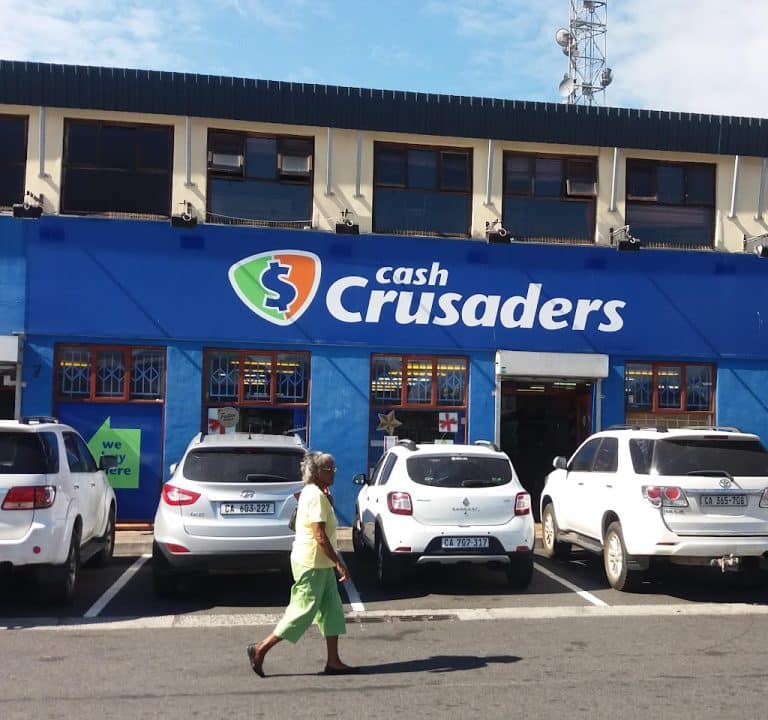
Cash Crusaders Plumstead is a Second hand store establishment in Cape Town, Western Cape, South Africa
Cash Crusaders Plumstead – Second Hand Store, Cape Town
Situated in the Checkers Centre on Main Road, Plumstead, Cash Crusaders operates as a practical hub for buyers and sellers of second-hand goods in the Western Cape. The store presents itself as a multifaceted marketplace where customers can convert unwanted possessions into cash, secure short-term loans, and browse a curated selection of pre-owned items. The Plumstead location serves the surrounding communities within Cape Town and the broader area, offering a straightforward model built around value, accessibility, and convenience.
The core services at Cash Crusaders Plumstead centre on three essential functions. First, the store actively welcomes customers to sell items for cash, providing a simple framework for turning unwanted possessions into immediate liquidity. The listing under the “Sell Goods for Cash” banner signals a streamlined process designed to appeal to individuals looking to realise value without a lengthy resale cycle. Second, the shop promotes lending against valuables, offering a 30-day loan facility. This option is described as a way to secure quick cash against items of value, subject to terms and conditions. Third, the store embraces digital convenience, highlighting WhatsApp as a practical channel for engaging with staff. Through WhatsApp, customers can obtain item quotes, arrange collection, and even engage in video calls with sales personnel or buyers, enhancing transparency and speed in the trading process.
In terms of product range, Cash Crusaders Plumstead categorises its stock into two broad streams. The “Pre-owned” section comprises a variety of second-hand goods sourced from customers. Within this area, customers can explore sub-categories such as Phones, Home Entertainment, Power Tools, Large Appliances, Gaming, and Computers. A separate “New Goods” section is also visible on the site, indicating a dual offering that blends refurbished or used items with new stock. The emphasis on pre-owned items aligns with the store’s identity as a second-hand retailer, while the presence of new goods suggests additional value channels for shoppers seeking brand-new products.
Operational details emphasise customer access and reliability. The Plumstead store operates with clearly posted retail hours: Monday to Friday from 09:00 to 17:30, Saturday 09:00 to 16:00, Sunday 09:00 to 13:00, and public holidays from 09:00 to 15:00. There is a separate Buyshop window for certain transactions with slightly adjusted hours, extending the potential window for customers seeking quick cash deals or loan arrangements. Contact information is readily available, including email addresses for general and managerial enquiries, a physical address (Shop 205, Checkers Centre, Gabriel House, Main Road, Plumstead, 7800), and telephone numbers for direct communication. The store’s online presence also provides a map link and a directory to view results for the Plumstead location, aiding customers in locating the premises easily.
From an experiential perspective, the store appears to integrate a blend of traditional in-store service with digitally facilitated interaction. The presence of WhatsApp-based services—such as obtaining item valuations, preparing items for collection, and conducting video calls with buyers or staff—reflects a customer experience engineered for practicality and immediacy. The facility to negotiate or confirm terms via a messaging platform can particularly appeal to customers seeking quick estimates or flexible arrangements without in-person visits.
- Main services offered: buy, sell for cash, and short-term loans against valuables.
- Typical job types and departments: pre-owned items across Phones, Home Entertainment, Power Tools, Large Appliances, Gaming, and Computers; new goods available in a separate category.
- How requests usually work: customers present items for valuation, agree on a cash price, or initiate loan arrangements; WhatsApp can be used for price checks, collection preparation, and video conversations with staff or buyers.
Practical tips for shoppers and sellers include verifying the store’s terms and conditions for selling and loan arrangements, bringing valid identification and any receipts for items, and using the WhatsApp channel to obtain initial valuations before visiting. To optimise the visit, consider arriving during weekday mornings or early afternoons when stores typically experience steadier footfall, particularly outside peak weekend periods. The Plumstead location clearly serves the surrounding Western Cape community and is well-positioned for residents seeking quick cash solutions or affordable pre-owned purchases within a bricks-and-mortar setting complemented by digital conveniences.
Cape Town
Western Cape
South Africa


Sorry, no records were found. Please adjust your search criteria and try again.
Sorry, unable to load the Maps API.
Second Hand Stores in Cape Town: Services and Practical Considerations
In Cape Town, Western Cape, second hand stores operate as diverse retail hubs offering a range of pre‑owned goods. Mentions of the service landscape reveal a consistent focus on value for money, sustainability, and community relevance. Shoppers often encounter a mix of household items, clothing, furniture, and bric‑a‑brac sourced from local residents and various donors. The tone of these shops tends to be practical and customer‑friendly, with an emphasis on accessibility and reasonable pricing rather than only high‑end branding.
Core services typically provided include the sale of pre‑loved items at affordable prices and the process of assessing items brought in by customers. Staff may offer basic guidance on the condition and origins of items, helping buyers to understand what is available and suitable for immediate use. Many stores also provide lower‑cost alternatives through weekend specials, bulk buys, or clearance sections. The emphasis is often on giving second lives to items that might otherwise be discarded, aligning with community sustainability goals common in urban South Africa.
Trade and exchange activities are common in the sector. Some shops accept donations and purchases from the public, while others operate a trade‑in or consignment model. In a trade‑in arrangement, customers may receive a portion of the sale price as store credit or cash in exchange for goods that are judged suitable for resale. Consignment arrangements, where items are kept on sale for a period and the original owner receives a share of the proceeds, are also seen in certain outlets. These models require clear record‑keeping, item tagging, and transparent pricing to foster trust with customers.
Quality assurance remains a practical consideration. Stores typically inspect items for safety and usability, particularly for furniture, electrical appliances, and children’s products. Where faults are detected, items may be repaired, refurbished, or clearly flagged as non‑functional. Cleaning, deodorising, and minor cosmetic refurbishments are common preparations that help items reach customers in good condition. Some businesses offer repair services or referrals for minor repairs, supporting longer item lifespans and customer satisfaction.
Customer experiences in Cape Town’s second hand market often involve a straightforward purchasing journey. Items are usually displayed in a paseo‑style layout or curated sections, with pricing clearly indicated. Buyers can expect to bargain in many locations, especially for bulk purchases or less recently stocked items. Payment methods typically include cash and card, with a growing number of shops accepting mobile payments or bank transfers. Some stores maintain loyalty schemes or informal discounts for locals, students, or bulk buyers.
Practical considerations shape the shopping experience. Parking access and street visibility are important, particularly in busier neighbourhoods and historic precincts around the city and surrounding suburbs. Shoppers may need to consider transport logistics when purchasing larger items such as furniture or appliances, including delivery options offered by the store or third‑party services. Stores may have varying policies on returns, refunds, or exchanges; customers are advised to confirm these details at the point of sale. It is also prudent to review the store’s hours of operation, as trading times can differ between venues and seasonal demand.
For residents and visitors, the second hand store sector in Cape Town supports affordability, cultural diversity, and environmental stewardship. While the specific inventory and services differ from shop to shop, the underlying framework typically centres on fair pricing, item inspection, and a transparent process for accepting, storing, and selling pre‑owned goods. This helps sustain local shopping ecosystems while offering practical options for households seeking value, variety, and responsible consumption in the Western Cape.
- Sale of pre‑owned clothing, furniture, books, domestic items, and electronics
- Item assessment, cleaning, and basic refurbishment
- Donations, trade‑ins, and consignment options
- Clear pricing, potential bargaining, and general price transparency
- Various payment methods and occasional loyalty incentives
- Delivery or third‑party pick‑ups for larger items
- Return, exchange, and policy information provided at point of sale
If this is your business, please click the button below to claim it.
By claiming the listing, you will be able to edit it, and add your own text, images, videos and business hours
Please use this listing as an advertisement for your business. It is provided for Free.