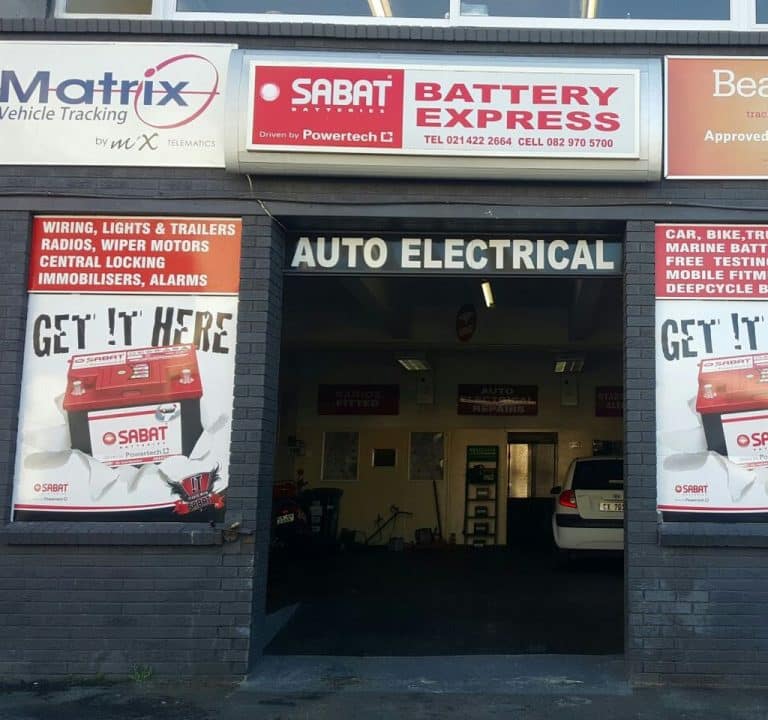
Battery Express and Auto Electrical Centre is a Batteries, Inverters and UPS establishment in Cape Town, Western Cape, South Africa
Battery Express is a family-run business operating in Cape Town since 1985. With hands-on involvement from the owners, the company places emphasis on customer satisfaction and practical, on-site battery solutions. The operation covers a broad range of automotive and related battery needs, positioning itself as a textured option for local motorists and businesses seeking reliable energy storage and power assistance.
The primary focus is on supplying and fitting a wide variety of automotive batteries. The selection encompasses car, motorcycle, truck, boat and caravan batteries, as well as specialised options for watercraft and motorised gates. The portfolio includes lead-acid, Enhanced Flooded Battery (EFB), Absorbed Glass Mat (AGM), Valve Regulated Lead Acid (VRLA), high-cycle and deep-cycle batteries. Notably, a substantial portion of the offered brands are SABS-approved, including Sabat, Willard, Grand Prix, Varta and Enertec. Where applicable, certain products carry extended warranties, such as Sabat and Willard batteries offering a 25-month warranty period.
In addition to batteries, Battery Express provides a range of supplementary products and services designed to support vehicle electrical needs. Clients can expect practical solutions such as the supply and fitting of wiper blades and headlight or tail light bulbs. The shop also offers battery recharging services, sale of battery chargers, and jumper cables, alongside core diagnostic and fitting capabilities. A comprehensive battery testing service helps determine condition and suitability, while battery terminals and alternator testing are available to diagnose and address electrical system health. Parasitic drainage and leakage testing is listed as part of the offering, supporting more advanced electrical fault finding. Delivery options include on-site fitment and roadside assistance, subject to enquiry about call-out fees and terms.
From a customer experience perspective, the business presents itself as a longstanding, locally rooted operation. The family ownership model is framed as a differentiator, promising attentive service and a focus on customer satisfaction. The emphasis on a broad product range and practical electrical services suggests a one-stop-shop approach for those seeking to restore or upgrade battery power, rather than a specialised, single-solution provider.
In terms of product information, the site highlights several battery technologies and their applications, along with simple care guidance. Educational content explains differences between vented flooded batteries, valve-regulated (recombination) sealed batteries, and maintenance-free options. The Battery Care section includes practical do’s and don’ts designed to help travellers extend battery life and avoid common pitfalls, such as avoiding discharge, avoiding open flames near batteries, and using appropriate protective coatings on terminals. A separate FAQ area provides definitions for various battery types and safety tips related to handling, charging, and emergency response, aligning with a responsible, safety-conscious customer experience.
For potential customers considering Battery Express, practical tips highlighted by the site include maintaining batteries in a fully charged state and ensuring proper polarity during charging and fitting. The guidance emphasises charging in well-ventilated areas and wearing protective clothing when handling batteries. The resource also recommends stock rotation and a first-in, first-out approach to inventory management, underscoring a professional, process-oriented operation. While the site does not disclose explicit pricing or affiliations beyond product brands, the warranty details and the breadth of services indicate a balanced, value-focused offering suitable for both private vehicle owners and small fleet operators.
Customers planning to visit or contact Battery Express should be prepared to discuss the vehicle type and battery requirement, as the service range spans passenger cars, SUVs, commercial and light commercial vehicles, tractors and other equipment. The cape-town area is explicitly served, with the Western Cape as the broader region. Best practices for visitors include confirming whether a specific service (on-site fitment, call-out options, or testing) is available at the chosen location and clarifying any call-out or delivery fees beforehand.
Practical tips for customers include bringing the existing battery for testing comparisons, asking about compatible brands and warranty options, and requesting on-site testing to assess alternator function and parasitic drain. When arranging work, it is helpful to specify whether the need is for a straightforward replacement, a diagnostic check, or a more comprehensive electrical system audit. While the directory listing does not publish hours, it is advisable to verify operating times and peak periods to minimise waiting times and ensure the availability of on-site services or collection options.
Cape Town
Western Cape
South Africa


Sorry, no records were found. Please adjust your search criteria and try again.
Sorry, unable to load the Maps API.
Batteries, Inverters and UPS Services in Cape Town
In Cape Town and the wider Western Cape, businesses and private properties increasingly rely on battery storage, inverters and uninterruptible power supply (UPS) systems to manage energy supply, mitigate outages and optimise electricity use. Service providers in this region typically combine expertise in electrical installation, battery technology and power management to offer holistic solutions that address load shedding, erratic municipality supply and rising electricity costs. The emphasis is often on reliability, safety and compliance with local electrical standards, while tailoring systems to site-specific conditions such as available space, solar exposure and backup duration requirements.
Typical services encompass consultation and design, installation, testing and commissioning, ongoing monitoring, maintenance and eventual replacement. A consultative phase usually assesses the expected load profile, critical circuits, available solar input, room for battery banks and ventilation needs. The design then determines the appropriate combination of batteries, inverters and a UPS or hybrid system to deliver a stable output during interruptions. In the Cape Town context, many installations are sized to provide essential load services during outages, with consideration given to the city’s climatic conditions, temperature ratings of batteries, and the practicality of heat management within enclosures.
Professionals commonly offer a range of systems, from compact residential solutions to larger commercial set-ups. Battery technologies frequently considered include lead-acid variants for cost-effective, reliable back-up and lithium-based options for higher energy density and longer cycle life. Inverters are selected to match the required power capability and efficiency, with attention paid to waveform quality, surge handling and compatibility with existing electrical infrastructure. UPS units provide instantaneous transition to back-up power, preventing data loss and equipment malfunctions for critical circuits such as servers, networks, medical devices or security systems. Some projects combine solar PV with battery storage to enhance self-consumption and reduce dependence on the mains supply during peak tariff periods.
Installation practices prioritise safety and compliance. Installers follow standard electrical codes, ensure proper isolation during work, and integrate protection features such as fusing, circuit breakers, battery temperature monitoring and ventilation for sealed battery banks. System commissioning includes rigorous testing to verify that the battery state of charge, inverter output, and UPS transfer times perform as intended under simulated outage conditions. Once commissioned, ongoing service contracts may cover periodic maintenance, health checks on battery cells, inverter firmware updates, and remote monitoring where available. This can help detect subtle performance drifts and extend the life of critical equipment.
Customers should consider several practical factors when planning Batteries, Inverters and UPS in Cape Town. Local climate and ambient temperatures influence battery health and expected run-time. Space constraints, noise levels from inverters and the need for adequate ventilation are important for courtyards, rooftops and interior plant rooms. Electrical safety, safeguarding against moisture ingress and ensuring compliance with electrical installation regulations are essential. Determine desired backup duration, critical circuits to prioritise and whether the system should be grid-tied, hybrid or fully off-grid. Budget planning should reflect not only initial installation costs but potential future maintenance, battery replacement cycles and monitoring subscriptions if offered by the service provider.
In summary, Cape Town providers of Batteries, Inverters and UPS services typically deliver comprehensive solutions that blend design expertise, safe installation practices and ongoing maintenance. The resulting systems aim to reduce disruption during outages, optimise energy use and protect valuable equipment, while adapting to the unique conditions of the Western Cape and South Africa’s electricity landscape.
If this is your business, please click the button below to claim it.
By claiming the listing, you will be able to edit it, and add your own text, images, videos and business hours
Please use this listing as an advertisement for your business. It is provided for Free.